
This document highlights IUCN’s efforts in Eastern and Southern Africa, working with governments, members, communities and partners to embed environmental considerations into their responses to COVID-19.
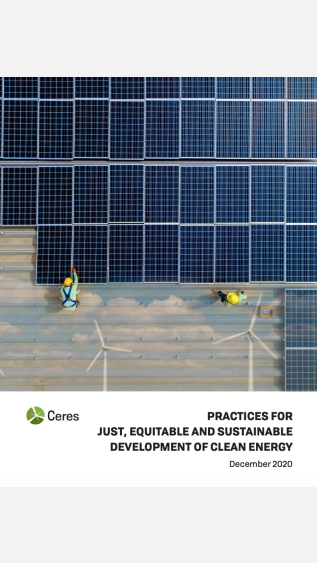
The U.S. energy sector’s shift to clean energy is creating a once-in-a-generation opportunity to build a more just, equitable and sustainable society. This report recommends the clean energy industry adopt five best practices to help ensure that the transition to clean energy in the U.S.
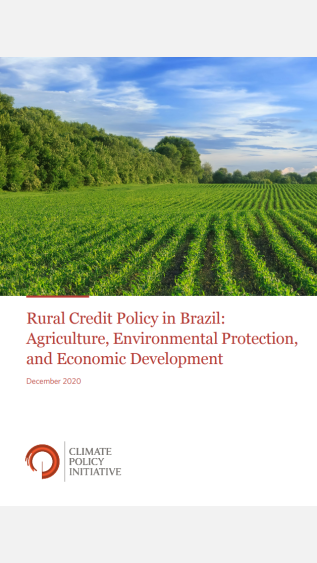
This report provides an in-depth analysis of Brazilian rural credit policy and discuss challenges and recent progress in public policy. The analysis benefits from years of research and discussions with policymakers, the private sector, and academic researchers. This report is organized in five chapters.
This report introduces the role of climate and energy-economic scenarios in informing climate-aligned policy and strategy.
This paper provides decision-makers with a framework for prioritising different economic, social and environmental goals and analysing the options available to achieve them. To this end, it develops three stylised COVID-19 recovery pathways (“Rebound”, “Decoupling” and “Wider well-being”) that differ in the extent to which they encompass greenhouse gas (GHG) emission reductions and the integration of mitigation and wider well-being outcomes or, broadly equivalently, SDGs.
The COVID-19 pandemic is expected to affect agricultural markets over the next decade. OECD analysis highlights how slower economic growth could affect food security, farm livelihoods, greenhouse gas emissions, and trade. The size of these impacts depends, among other things, on the severity of the drop in global GDP. Based on two scenarios for economic growth recovery, this brief describes how the economic shock from the pandemic could reverberate through the agriculture sector over the next decade.