
This study examines the impact of wholesale electricity prices with varying levels of carbon pricing on the reduction of carbon emissions in Australia.
This report aims to provide guidance and insights to policy-makers, regulators, and affected stakeholders on how evaluate and plan for how to protect the tenure rights of small food producers, particularly women, indigenous peoples (IPs) and other vulnerable groups, to avoid exacerbating the negative effects of the existing health crisis.

Expert practitioners and decision-makers from the government, NGOs, indigenous peoples and the private sector from different continents (Africa, Asia, Europe, Latin America) joined a discussion on existing approaches and financial incentive measures for biodiversity mainstreaming. The report summarises the contributions as well as the most important conclusions and is of interest to anyone who would like to keep up to date on how financial incentives can ensure greater consideration of biodiversity in business.

The paper, The circular economy: a transformative COVID-19 recovery strategy demonstrates how policymakers can pave the way towards such a future.
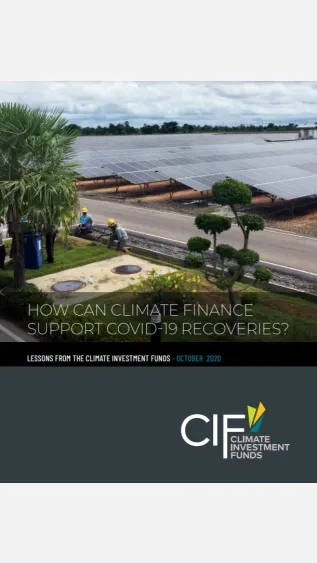
The purpose of this learning brief is to share lessons and insights on how climate-related investments can support countries’ COVID-19 recovery efforts, drawing on recent evidence and experience in the Climate Investment Funds (CIF).
This report provides a first-of-its-kind empirical assessment of investment in infrastructure by institutional investors domiciled in OECD and G20 countries, presenting a snapshot from February 2020.