
This report provides a structural analysis of the relationship between resilience and the circular economy.
This paper promotes solutions to reduce organic (livestock) and inorganic waste, and maps technologies, systems, and strategies for proper waste management.
This report discusses the actions required to reach the 1.5°C target.
A transformative, integrated, and holistic approach to sustainability is necessary to reach a prosperous future for all. With growing inequality in the world, demographic change, and rapid technological development, and 40 percent of the world’s population with no access to digital technology, access to digital technology for all and ultimately having a prosperous future is a must. Doing so will give a voice to the voiceless. For that, governments, companies, and transnational institutions should invest as much as possible to make it happen and provide solutions that are rules-based, inclusive, innovative, disruptive, and simple. Access to energy, mitigating climate change, and benefiting from international trade and investment all can be achieved thanks to technological advancement. These global challenges are complex, interconnected, multidimensional, interdependent, and multi-causal.
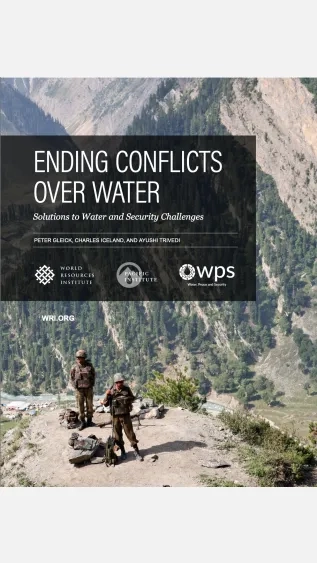
The framework presented in this report provides decision-makers with options for tailoring solution sets to unique water challenges. It is intended for global development, diplomacy, defense, and disaster response experts as well as for national- and river basin-level decision-makers charged with addressing natural resource–based conflict, migration, and other forms of insecurity.
This report examines whether the SDGs have led to a change in investment strategies, new investment products or new investment flows.