
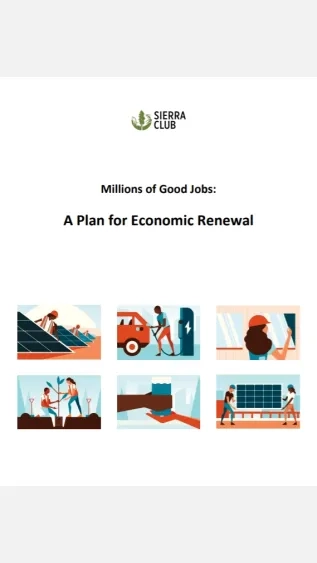
The COVID-19 pandemic has resulted in an economic crisis in the United States. Tens of millions of people are out of work, one in three families with children cannot afford adequate food, and three million small businesses expect to close their doors permanently. This report proposes a path forward – with a bold economic renewal plan that would sustain jobs for more than 9 million people every year for the next 10 years while building an economy that fosters cleaner air and water, higher wages, healthier communities, greater equity, and a more stable climate.
This report is part of a series looking at climate change and biodiversity considerations in economic responses to COVID-19.
This paper evaluates green stimulus packages that were introduced in response to the global financial crisis (GFC) of 2007-08 and draws lessons relevant for greening the recovery from the Coronavirus (COVID-19) crisis.

This report provides the results from a study assessing the impact of the COVID-19 pandemic on the activity of formal businesses in Cote d'Ivoire. The results of the study show an overall loss of activity of more than 26 percent, with the consequence of destroying more than 130,000 salaried jobs at the end of December 2020 if the situation continues. Faced with the negative effects of this crisis on the economy, the government has announced a number of measures to help businesses.
As the technical lead for the socio-economic response, UNDP and its country offices worldwide are working to assess the socio-economic impacts of the COVID-19 pandemic on economies and communities. This report contains the preliminary findings of the socio-economic assessment conducted for Cuba.
As the technical lead for the socio-economic response, UNDP and its country offices worldwide are working to assess the socio-economic impacts of the COVID-19 pandemic on economies and communities. This report contains the preliminary findings of the socio-economic assessment conducted for Mali.