
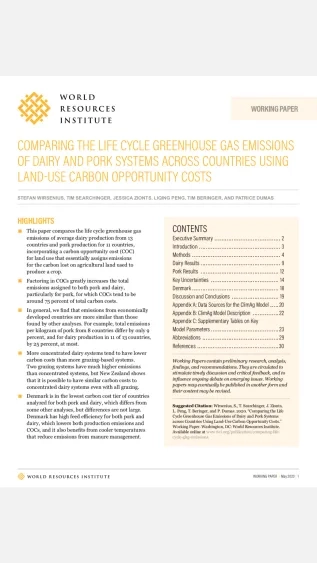
This paper compares the lifecycle greenhouse gas (GHG) costs of dairy production across 13 countries and pork production across 10 countries to obtain insights about what causes higher or lower emissions.
This study by the World Bank discusses the International Transfer Readiness (ITR) module as starting point for identifying gaps and capacity building needs to develop the necessary institutional framework and infrastructure for climate markets under the Paris Agreement, and key messages from ITR results.
Chinese asset managers have made progress in expanding their ESG research capabilities, and onshore Chinese companies have increasingly been included in global benchmarks.
The report describes the two main driving forces for the development of responsible investment and ESG integration in China: top down policy pushing for green growth, and globalisation, which opens China up to scrutiny from international investors. Additionally, a third pressure is proposed: that ESG can be a source of alpha and better returns.
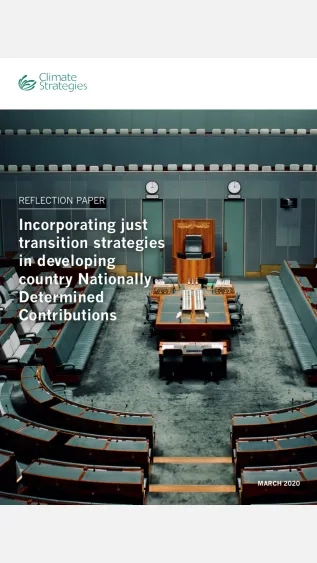
This reflection paper explores how developing and least developed countries can incorporate just transition principles into their revised NDCs, enabling more ambitious and equitable emission reduction strategies.
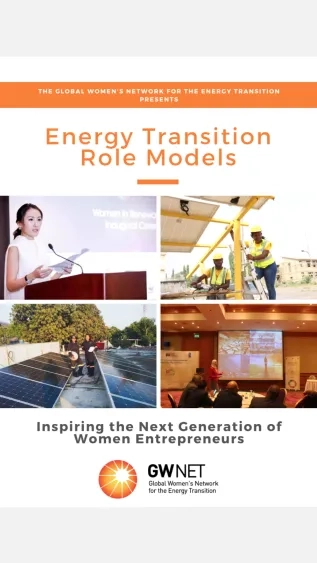
This brochure contains global, regional, and national resources for entrepreneurs in the energy sector. It also hopes to balance the picture of the predominant image of male leadership and male entrepreneurship by showing a wide array of what is possible for female entrepreneurs in the sphere of sustainable energy, including but not limited to innovative block-chain based solutions, financing and legal services.
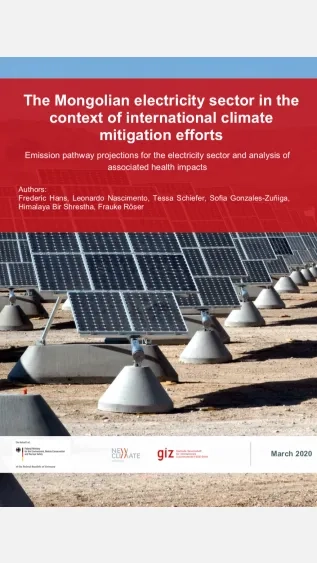
This report summarises analyses on the implication of the Paris Agreement’s temperature limit for the Mongolian electricity supply sector, considers the health impacts associated with air pollution from coal power plants, and identifies several actionable next steps to accelerate mitigation ambition in the future.