
Overview
This handbook offers and insight of the inner workings of the innovative mechanisms “Citizen Finance” and attempts to serve as a practical guidance for local and regional stakeholders. Citizen Finance is not a standardized mechanism for funding climate action projects and initiatives, rather it could be seen in terms of a practice. However, there have been several examples where citizen finance has been used for adequately funding Sustainable Energy and Climate Action projects. In broad terms, Citizen Finance is a form of financing instruments where citizens pool their financial resources to fund initiatives that create common goods. The two most common and relatively advanced forms of Citizen Finance are: (1) Crowdfunding and (2) Financing through cooperatives. These two forms of Citizen Finance will be the focus of this module. The module also provides step-by-step guidelines on how projects can be financed and what can be learned from the best practices and case studies in the European Union.
Module objective
Mentees:
The acronym LISBETH stands for LInking accounts for ecosystem Services and Benefits to the Economy THrough bridging. This report expands on the concept of LISBETH, which is based on INCA (Integrated system for Natural Capital Accounting) and provides three practical examples to explain its application.
This policy brief elaborates on strategies to bridge the funding gaps between Indonesia's required annual budget, and the allocated resources to achieve its climate goals.

This guidance provides policy recommendations for decision-makers on pollination management in urban settings.
This report presents examples of legal, regulatory, and policy approaches as well as of reports, studies, and guidance to support climate risk, vulnerability and impact assessment, and the development of effective adaptation response measures. It also provides a brief overview of climate change impacts on coastal transportation and of recent trends and projections regarding some key climate drivers of relevance to coastal zones, as well as of approaches to risk-assessment and adaptation.
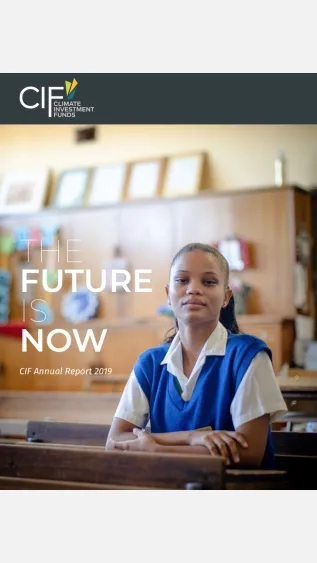
This resource describes CIF's main achievements up to 2020, along with its strategies and priorities. This is supported by key examples of recent projects around the globe, such as CIF support for farmers and ranchers in the Brazilian Cerrado piloting low-carbon agricultural practices. Key roles played by CIF in climate finance, as a learning lab, and as a pioneer in climate change action, are highlighted. A list of CIF program snapshots and CIF-GDI case studies are included.
The report concludes with CIF's focus points for 2021: