
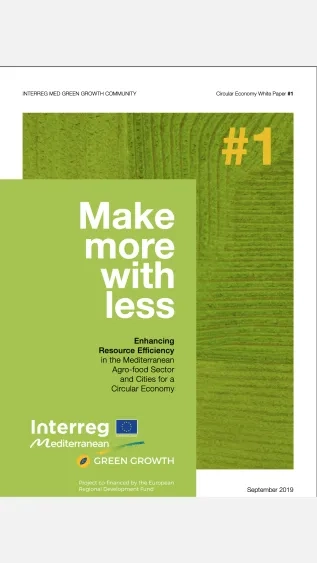
The first of four Thematic Working Groups created by the Interreg MED's Green Growth community focused on Sustainable Consumption and Production by enhancing Resource Efficiency in the Mediterranean agrofood sector as well as in urban areas through the implementation of the Smart City Concept.
- Measuring their environmental footprint and resource efficiency;
- The use of low-cost, low-tech, labour-intensive, and rudimentarily-equipped greenhouses;
- The lack of energy efficiency and renovation of EU buildings.
It then presents the projects' solutions and the benefits of resource efficiency for the environment and the economy. The projects were monitored according to the EU CEAP's indicator framework.
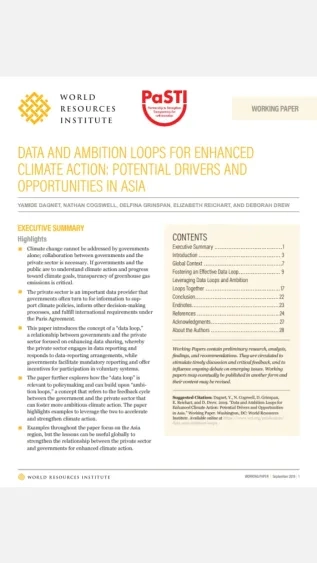
This paper explores how data loops can support opportunities for enhanced climate action.
This paper discusses the risks associated with certain resource pathways and offers insight into how to develop the global economy within planetary boundaries.
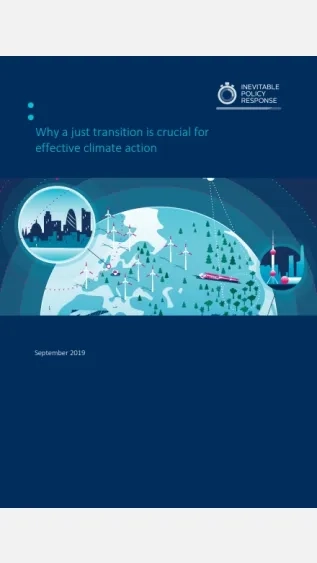
This report explores just transition in the context of long-run economic transition with potential challenges and examples.
This report provides a framework for governments to identify potential nature-based solutions with the aim of enhancing their climate mitigation and adaptation action in a cost-effective manner and with multiple co-benefits.
The Technical Background Report to the Global Mercury Assessment 2018 was produced by an international team of experts convened through a collaboration between UN Environment and the Arctic Monitoring and Assessment Programme (AMAP). World Health Organization experts contributed to sections dealing with mercury exposure in humans.