
The handbook is a practical guide for firms who wish to expand their supply chains by working with smallholder farmers. The purpose is to enable more productive interactions between private firms and smallholders, creating value in all parts of the chain. It covers a broad range of topics including farmer aggregation, training and communication strategies, standards and certification, access to inputs, farm management, the role of women in supply chains, and measuring results. It also provides a framework for decision making and recommends tools and resources for firms engaging with smallholder farmers.
This report reviews the Initiative’s successes and failures, and its responses to these. It documents how robust and integrated evidence—along with changes in policy, budgeting, investment and monitoring frameworks and involving a diverse set of actors—has begun to shape the institutions needed to achieve the Sustainable Development Goals (SDGs).
The story told in the pages is one of reaping the rewards of this multi-year, complex effort to mainstream poverty, environment, climate, gender and equity into the heart of government. Results have been achieved through the provision of an integrated approach to mainstreaming the poverty-environment nexus in 24 national and 4,214 local development plans for 17 countries, 93 sector strategies in 13 countries, 84 budget processes in 10 countries and 56 monitoring and evaluation systems in 12 countries.
This summary report highlights the Initiative’s successes and failures, and its responses to these. It documents how robust and integrated evidence—along with changes in policy, budgeting, investment, and monitoring frameworks and involving a diverse set of actors—has begun to shape the institutions needed to achieve the Sustainable Development Goals (SDGs). The report offers a set of recommendations on how to achieve policy, budget, and expenditure coherence for sustainable development using country-owned planning frameworks, new knowledge and tools, and building national capacities.
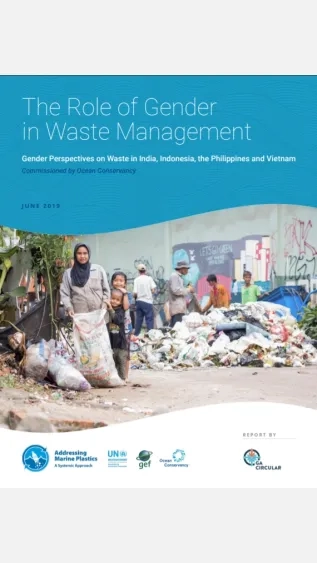
This report provides an assessment of women's role in the waste management sector in India, Indonesia, the Philippines, and Vietnam.
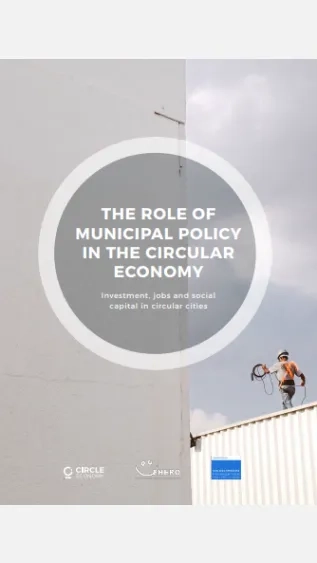
This report explores the connection between municipalities pursuing circular economy policy and investments in circular business that create jobs.