
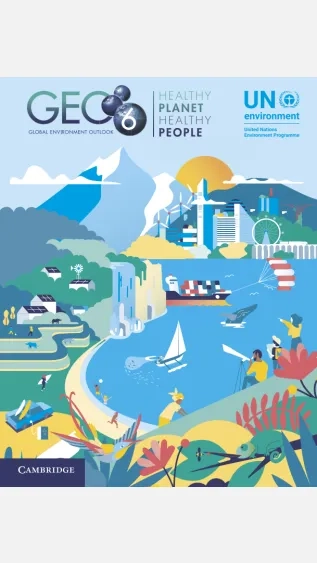
Under the theme of ‘Healthy Planet, Healthy People,’ UN Environment’s sixth Global Environment Outlook (GEO-6) presents a comprehensive assessment of the state of the global environment, covering a range of topics, issues and potential solutions with contributions from over 250 scientists and experts from more than 70 countries.
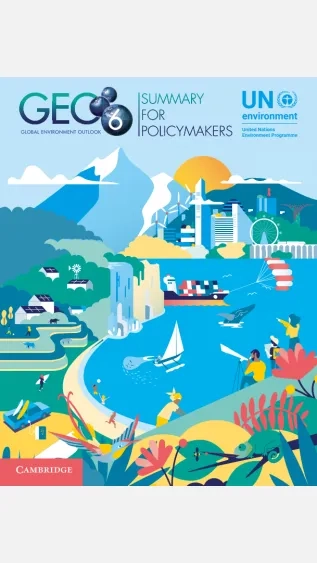
The sixth Global Environment Outlook (GEO-6), focusing on the theme “healthy planet, healthy people”, aims to help policymakers and all of society achieve the environmental dimension of the Sustainable Development Goals, internationally agreed environmental goals and the multilateral environmental agreements. It does so by assessing recent scientific information and data, analyzing current and past environmental policy, and identifying future options for achieving sustainable development by 2050.
GEO-6 builds on previous GEO reports and continues to provide an analysis of the state of the global environment, the global, regional and national policy response as well as the outlook for the foreseeable future. It differs from previous GEO reports in its emphasis on Sustainable Development Goals and in providing possible means of accelerating achievement of these goals. GEO6 is made up of four distinct but closely linked parts.
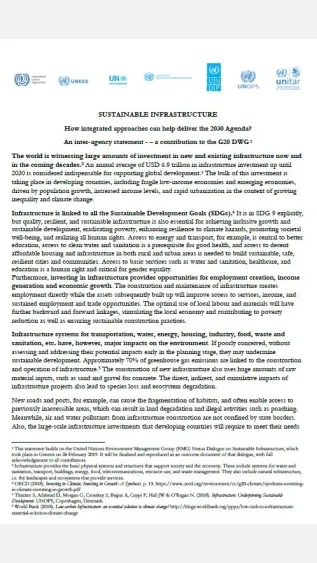
This interagency statement issued jointly by seven UN agencies calls upon all stakeholders involved in the infrastructure lifecycle to support an integrated approach to the development of sustainable and resilient infrastructure to accelerate the SDGs and 2030 Agenda.
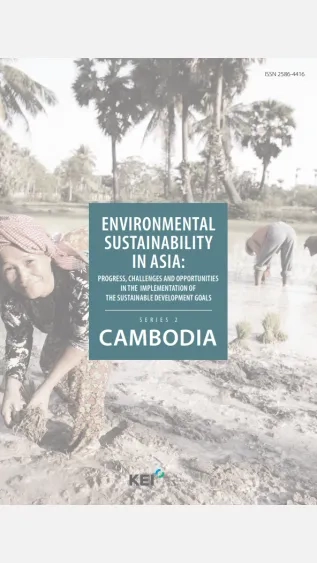
The Environmental Sustainability in Asia publication series, published by the Korea Environment Institute (KEI), demonstrates a comprehensive picture of the progress, challenges and opportunities of the Sustainable Development Goals (SDGs) implementation in the Asian countries. The second issue in the series focuses on Cambodia
The study explores the link between financial returns and gender diversity; the lack of women in the industry; and steps needed to achieve gender balance. One of the key findings of the report is that private equity and venture capital funds with gender-balanced senior investment teams generated 10 percent to 20 percent higher returns compared with funds that have a majority of male or female leaders.
The G20 Green Finance Study Group (GFSG) and Sustainable Finance Study Group (SFSG) have been looking at ways to overcome a variety of institutional and market barriers to scaling up private finance over the last three years. Seven options were outlined in the G20 Green Finance Synthesis Report released in September 2016, and the Green Finance Progress Report assessed progress against these seven options in the 12 months that followed. This report focuses on progress in sustainable finance developments from July 2017 to the current date.