
This Country Planning Framework (CPF) sets the strategic direction for the Global Green Growth Institute (GGGI) in Peru over the period 2017-2021.
This paper Fair Fishing: Supporting Inclusive Fiscal Reform in Fisheries focuses on fiscal fisheries management instruments, which governments use to influence economic decisions on government spending and raise revenue through taxation.
This reference guide, Financing Climate Resilience in African Cities, from the USAID-funded Adaptation Thought Leadership and Assessments (ATLAS) project provides an overview of the wide range of finance mechanisms available to governments to fund climate resilience initiatives at both the national and local level. The guide also outlines the opportunities and challenges for municipal governments in sub-Saharan Africa to use select finance mechanisms to provide for their citizens needs as cities grow and the climate changes, providing illustrative interventions to increase the change of each mechanism’s success.

This report, 1.5-Degree Lifestyles: Targets and options for reducing lifestyle carbon footprints, analyses the carbon footprint of household lifestyles and how changes can contribute to meeting the ambitious 1.5-degree aspirational target envisaged by the Paris Agreement on climate change. It analyses scientific emission scenarios and case studies from Finland, Japan, China, Brazil, and India, and proposes long-term targets for individuals’ lifestyle carbon footprints by 2030-2050, as well as low-carbon options that citizens and society can adopt.
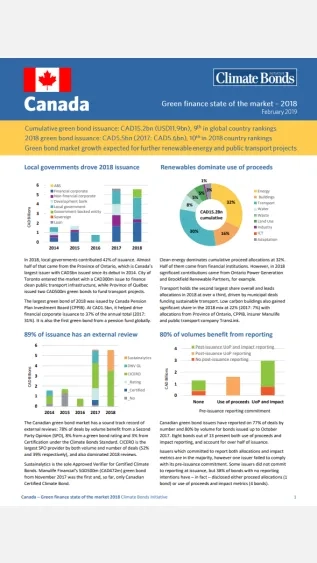
The 2018 State of the Market report marks the seventh annual stocktake of green bonds and green finance in Canada, produced in partnership with the Climate Bonds Initiative.
This paper analyses and discusses options for addressing equity concerns in fisheries subsidy reform and calls for governments to consider the impacts of subsidies and subsidy reform on vulnerable social groups.