
The Collaborative Framework for Food Systems Transformation explains how governments and stakeholders, at national or local levels, can apply a food systems approach to policymaking and implementation. The publication suggests practical and easy-to-follow actions for performing analyses of food systems, expanding or reorienting existing activities, integrating policy interventions, and building effective food systems governance.
This edition of the Group of Experts on the Scientific Aspects of Marine Environmental Protection (GESAMP) Hazard Evaluation Procedure provides an updated set of criteria for evaluating the hazards of chemicals (substances and mixtures) that may enter the marine environment through operational discharge, accidental spillage, or loss overboard from ships. Hazards to both human health and the marine environment are considered and the information is collated in the form of a “hazard profile”, a comprehensive but easily readable fingerprint of the hazard characteristics of each substance.
This paper maps several dimensions of the e-waste problem and provides a snapshot into future challenges. It looks into what we can anticipate into how the use of e-products and management of e-waste could evolve.
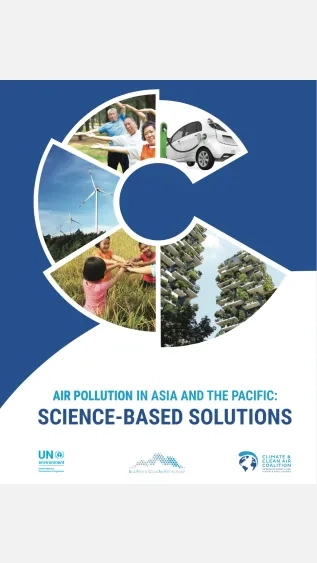
This report identifies 25 clean air measures that can positively impact human health, crop yields, climate change, and socio-economic development as well as contribute to achieving the Sustainable Development Goals (SDGs). Implementing these measures could help 1 billion people breathe cleaner air by 2030 and reduce global warming by a third of a degree Celsius by 2050.
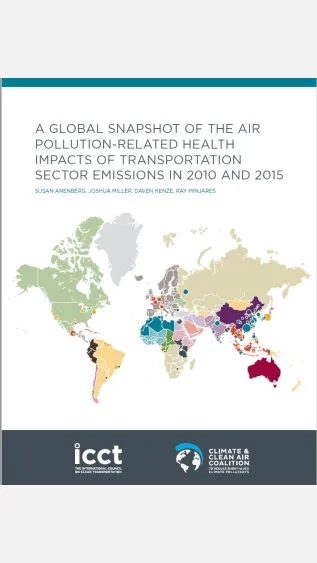
This report links state-of-the-art models on vehicle emissions, air pollution, and epidemiological models to determine how, when, and where transportation emissions are impacting air quality and public health. It advances beyond examining the transportation sector as a whole, evaluating the health burden attributable to specific subsectors: on-road diesel vehicles, on-road non-diesel vehicles, shipping, and non-road mobile sources that include agricultural and construction equipment and rail transportation.
This report is the first-ever comprehensive scientific assessment of the air pollution outlook in the Asia and the Pacific region. It outlines 25 clean air measures that could achieve safe air quality levels for 1 billion people by 2030, with numerous benefits for public health, economic development, and the climate.