
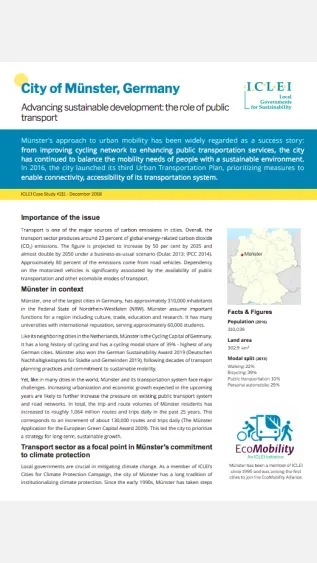
This report features how Münster, Germany, is developing a people-centered transport system, with efforts to improve accessibility, connectivity, inclusivity, and sustainability.
This policy brief, How to Better Reflect Transport in Climate Action Efforts, addresses the transport sector, the second-largest emitting sector in the world, and how to streamline it into the climate change policy process.
This paper, Forest Resilience Finance Opportunities & Challenges: Helping forests adapt to climate change, is intended to support the climate finance community, consisting of policy makers; multilateral agencies; development finance institutions; and private sector insurance and capital markets, in understanding the value that forests create; what risks forests face; how climate change will impact these risks and lastly, the role of traditional and innovative climate finance solutions to address the values at risk.
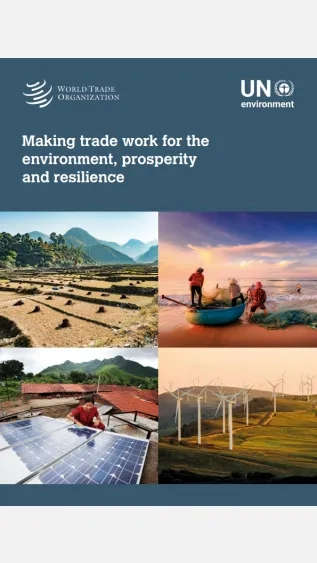
This publication illustrates how trade can support action by governments, companies, innovators, and consumers to improve economies and protect the environment.
Stakeholder and public support are critical for an enduring and robust carbon pricing policy. How jurisdictions communicate their carbon pricing policy plays a key role in creating and maintaining that support. Drawing on case studies, research, and best practice, the report, Guide to Communicating Carbon Pricing, provides guidance on designing and implementing effective carbon pricing communications strategies.
This report looks at a broad range of policies that could have potential direct and supply chain impacts on the level of greenhouse gas emissions produced at a national level.