
This report lays out an agenda to enable societies around the world to undertake the kind of systemic actions that the transformation towards a low-emission, resilient future will require. It highlights 6 transformative areas and 20 actions that are key to aligning financial flows with climate and development goals in the areas of planning, innovation, public budgeting, financial systems, development finance and cities.
This brochure shows examples of research related to science, technology, and innovation (STI) activities carried out by Institute for Global Environmental Strategies (IGES) that take an integrated approach to sustainable development through Sustainable Development Goal (SDG) interlinkages. To facilitate integrated SDG policymaking and implementation, IGES developed an innovative SDG Interlinkages Analysis and Visualisation Tool.
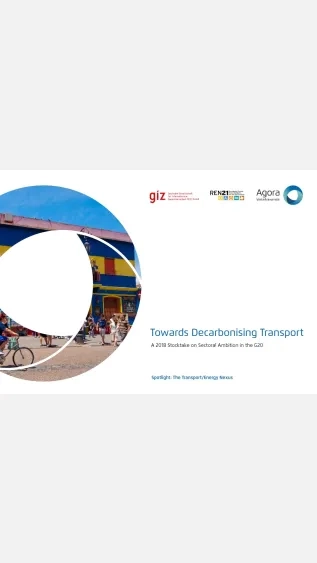
This study provides a clear picture of the state of G20 transport emissions, analyses already existing approaches for decarbonising the transport sector and stresses the urgency of putting ambitious climate action on the political agenda. It includes factsheets on each G20 member that shed light on the specific situation and challenges in each country, including existing goals and efforts. The report concludes by comparing stated ambition with implemented policies and actions while also considering required global reductions in the transport sector to keep the global temperature rise well below 2 degrees Celsius.
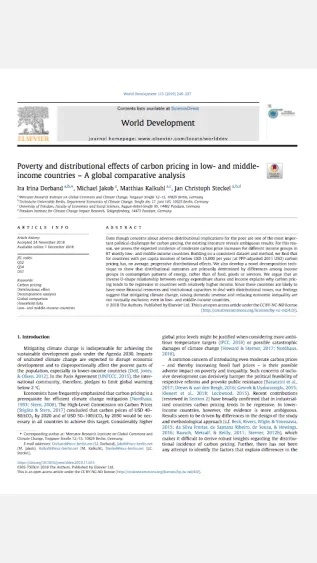
This study assesses the expected incidence of moderate carbon price increases for different income groups in 87 mostly low- and middle-income countries.
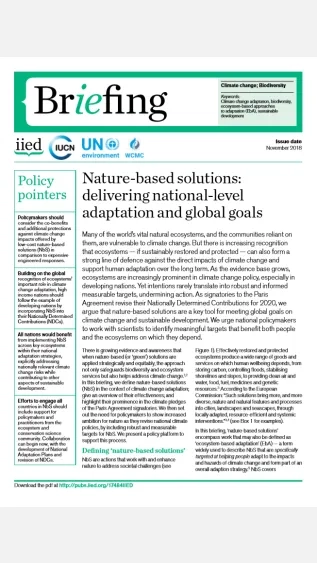
Many of the world’s vital natural ecosystems, and the communities reliant on them, are vulnerable to climate change, yet ecosystems themselves can form a strong line of defense against the direct impacts of climate change. This paper argues that nature-based solutions are a key tool for meeting global goals on climate change and sustainable development.

This report provides investment potential estimates across six key sectors (waste, renewable energy, public transportation, water, electric vehicles, and green buildings). Sector-specific investment potentials are estimated at the global and regional levels. The report also addresses urban resilience, financing solutions, and includes six deep dives into specific cities – one from each region – representing various sizes and stages of development: