
International Trade and the Transition to a More Resource Efficient and Circular Economy highlights the potential interaction of international trade and the circular economy in order to map out potential issues to address and to guide further research areas to explore on this topic.
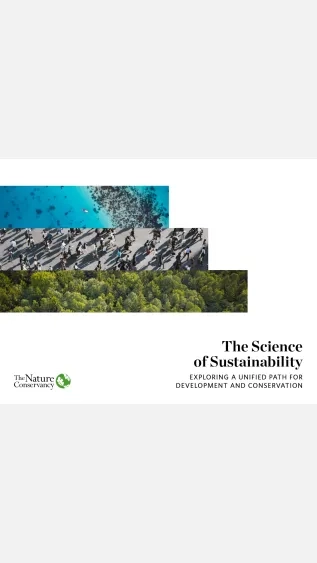
This report, based on research from the Nature Conservancy, the University of Minnesota and 11 other organizations, explores whether it is possible to achieve a future where the needs of both people and nature are advanced. It projects the state of the world in 2050 if development progresses in a “business-as-usual” fashion, and what it would look like if a sustainable path was implemented with a series of fair-minded and technologically viable solutions to the challenges that lie ahead.
Aligning Investments with the Paris Agreement Temperature Goal: Challenges and opportunities for multilateral development banks proposes a definition of alignment with the Paris temperature goal and reviews decision-making tools for assessing alignment and shifting portfolios used by seven major multilateral development banks.
This Pilot-Study for the Analysis of the Environmental Impacts of Commodities Traded in Switzerland evaluates the environmental impacts of commodities traded by Swiss companies without being physically transported to Switzerland. Like this, they are excluded from foreign trade statistics or input-output analysis. With Switzerland trading 20-65% of global trade, depending on the commodity, this pilot-study closes this gap.
This book is about the challenges and opportunities facing developing countries in using their extractive industries (oil and gas and mining) to achieve inclusive and sustainable development.

This chapter looks at the prescription of optimally managing natural resource revenue windfalls by smoothing consumption across generations using an intergenerational sovereign wealth fund that only invests in foreign assets and is not appropriate for resource-rich developing economies.