
Modelling Policy Coherence Between Adaptation, Mitigation and Agricultural Productivity develops theoretical and quantitative analysis to identify the potential synergies and trade-offs inherent in various policy instruments that address agricultural productivity, climate change mitigation and adaptation, and water quality objectives

Before It’s Too Late: Deriving sustainable value from wildlife in the western Congo Basin presents lessons from international experience for creating economic value from wildlife to help address the rapid decline of wildlife resources in the the Western Congo Basin while contributing to both poverty alleviation and conservation.
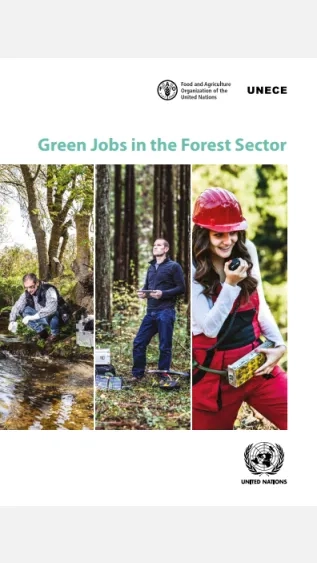
This report, Green Jobs in the Forest Sector, provides an overview of existing Green Forest Jobs and identifies possible areas for future activities and jobs in the forest sector, and may serve as starting point for further analysis and discussion on the future of Green Forest Jobs.
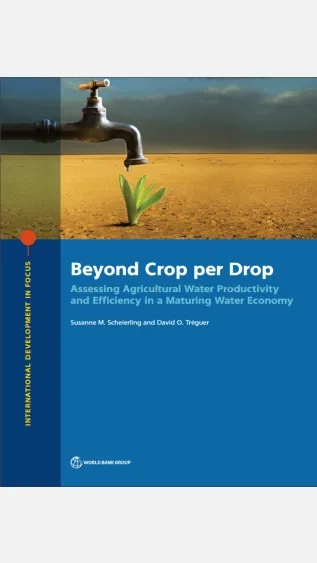
This report, Beyond Crop per Drop: Assessing agricultural water productivity and efficiency in a maturing water economy, aims to shed further light on conceptual issues as, the methods used for measuring agricultural water productivity and efficiency, and the application of these concepts and methods in different contexts—all of which influence the choice of interventions and the evaluation of their implementation.
Green Growth and Decarbonization of Energy Systems in a Changing World aims to show how the transition to a low-carbon society through the decarbonization of energy systems can bring social and economic benefits and foster countries’ economic competitiveness. It notably evaluates the inter-linkages between decarbonization and Sustainable Development Goals (SDGs) and emphasizes the need for carbon pricing and climate finance. Additionally, it advocates for ambitious industrial policies to accompany energy-intensive companies in the low-carbon transition and takes example in several successful cases of decarbonization around the world.
This policy report was developed based on submissions from LCS-RNet research members, presented during the 9th Conference of the International Research Network For Low-Carbon Societies (LCS-RNet), which took place on 12 and 13 September 2017 at Warwick University, United Kingdom.
As the world’s cities are growing, urban sprawl is getting worse. An new OECD study of 1,100 cities shows 60% of space is now low-density. This erratic city growth is damaging the environment. What can policy makers and governments do to move towards more sustainable cities?