
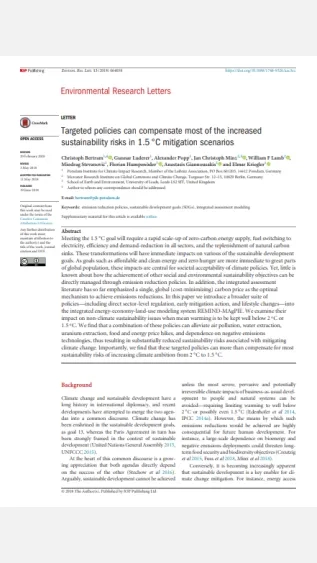
Meeting the 1.5 °C goal will require a rapid scale-up of zero-carbon energy supply, fuel switching to electricity, efficiency and demand-reduction in all sectors, and the replenishment of natural carbon sinks. These transformations will have immediate impacts on various of the sustainable development goals. As goals such as affordable and clean energy and zero hunger are more immediate to great parts of global population, these impacts are central for societal acceptability of climate policies. Yet, little is known about how the achievement of other social and environmental sustainability objectives can be directly managed through emission reduction policies. In addition, the integrated assessment literature has so far emphasized a single, global (cost-minimizing) carbon price as the optimal mechanism to achieve emissions reductions.
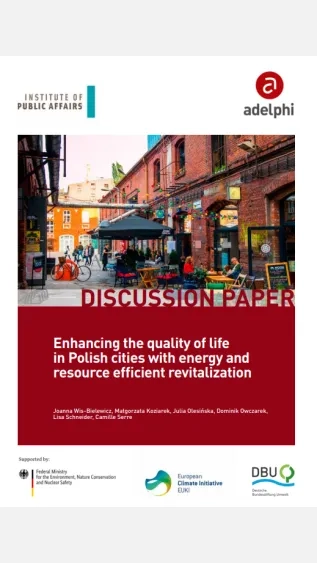
In the paper, Enhancing the quality of life in Polish cities with energy and resource efficient revitalization, authors examine the added value of resource-efficient revitalization and reshaping Polish cities into attractive, healthy and economically vital communities.

The Nature Conservancy's Envisioning a Great Green City:The Nature Conservancy’s vision for a sustainable urban century helps imagine cities that are not apart from nature—but a part of nature.

The State and Trends of Carbon Pricing 2018 report and series reflects on the growing momentum for carbon pricing worldwide. It targets the wide audience of public and private stakeholders engaged in carbon pricing design and implementation.
The Addressing Off-Taker Risk in Renewable Projects in India: A Framework for Designing a Payment Security Mechanism as a Credit Enhancement Device technical paper presents a payment security mechanism that aims to enhance the credit quality of renewable energy projects in India by providing protection against defaults/delays in payment obligations due towards a project.
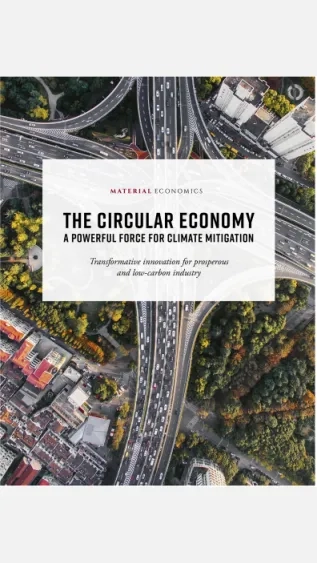
The Circular Economy - a Powerful Force for Climate Mitigation report investigates how a more circular economy can contribute to cutting CO2 emissions. It explores a broad range of opportunities for the four largest materials in terms of emissions and two large use segments for these materials.