
This report analyses the potential of the offshore wind industry to participate in the energy transition through the opportunities it offers for local value creation for countries that choose to develop the technology.
This report provides guidance for practitioners on existing tools that can be applied to measure or model ecosystem services provided by important sites for biodiversity and nature conservation, including Key Biodiversity Areas, natural World Heritage sites, and protected areas.
This report identifies, classifies, and assesses the relevance of the potential determinants (drivers and barriers) that may explain the use of the cooperation mechanisms of the Renewable Directive 28/2009/EC in the past. The analysis of such historical evidence constitutes a very useful knowledge base to understand the factors that will likely determine the future of renewable energy cooperation in Europe.
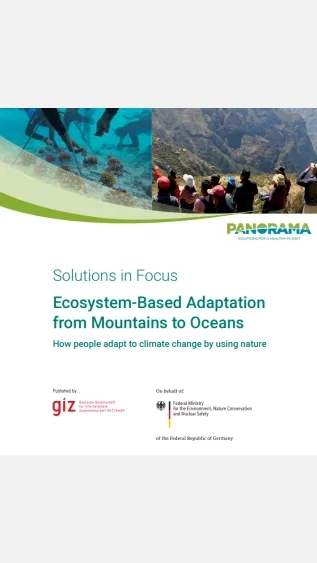
This publication presents a selection of 30 applied Ecosystem-based Adaptation (EbA) measures across five ecosystems. These solutions are intended to inspire policy and decision makers as well as project developers, showing that EbA has ‘many faces’ and is being implemented successfully by a broad range of actors and organizations.
Plastics have become one of the most prolific materials on the planet: in 2015 we produced about 380 million tonnes of plastics globally, up from 2 million tonnes in the 1950s. Yet today only 15% of this plastic waste is collected and recycled into secondary plastics globally each year. This report looks at why this is the case and what we can do about it, as the pervasiveness of plastics is becoming an urgent public health and planetary problem.
This paper reviews debates and practice around the conventional and alternative measures of economic well-being. Evaluating the major contending measures – the Genuine Progress Indicator, Human Development Index, Happiness/life evaluation index, Happy Planet Index, the OECD’s Better Life Initiative dashboard – the paper argues that the GPI is the only indicator that incorporates care for human beings and care for the environment in a single framework and is therefore best suited to guide policy in responding to the major challenges of our time – rising inequality, climate change, environmental destruction.