
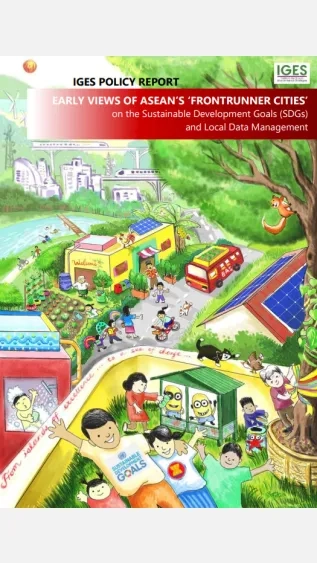
This policy report shed light on how the average government official perceives SDG-11 with the other goals, as well as misconceptions in interpretation by officials who are not highly familiar with the SDGs.
This paper explores the role of state-owned enterprises (SOEs) in the low-carbon transition in OECD and G20 countries.
Carbon Pricing in Practice: A review of existing emissions trading systems analyses the implementation of emissions trading systems (ETSs) in eight jurisdictions: the EU, Switzerland, the Regional Greenhouse Gas Initiative (RGGI) and California in the US, Québec in Canada, New Zealand, the Republic of Korea and pilot schemes in China. The article clarifies what is working, what isn’t and why, when it comes to the practice of implementing an ETS.
The eight ETSs are evaluated against five main criteria: environmental effectiveness, economic efficiency, market management, revenue management and stakeholder engagement. Within each of these categories, ETS attributes − including abatement cost, stringency of the cap, improved allocation practices over time and the trajectory of price stability − are assessed for each system.
Baltic Energy Technology Scenarios 2018 (BENTE) is a scenario-based energy system analysis that explores the changes in the Baltic countries’ energy systems. What are the drivers and their impacts in the following decades? What would be required for the Baltic countries to meet their climate and energy targets in 2030, and what development would lead the Baltics towards a 2°C pathway?
The report finds that the Baltic countries’ proposed renewable energy (RE) targets can be achieved using domestic resources. More renewable energy (electricity, heat and fuels) lets energy demanding sectors reduce GHG emissions and increase the RE share. However, the Baltic countries still do not reach their Effort Sharing Sector’s 2030 targets in the 4°C Scenario (4DS). Without policies to stimulate local renewable energy generation, the Baltics are likely to become large net importers of electricity.
The report Global Trends in Renewable Energy Investment 2018 finds that falling costs for solar electricity, and to some extent wind power, is continuing to drive deployment.