

The report Water Scarce Cities: Thriving in a Finite World is an advocacy piece to raise awareness around the need to shift the typical way urban water has been managed and to share emerging principles and solutions that may improve urban water supply security in water scarce cities.
At the WTO’s Eleventh Ministerial Conference in December 2017, ministers adopted a Decision on Fisheries Subsidies directing negotiators to continue talks with a view to adopting an agreement by 2019, the year of the next ministerial conference. The ministerial decision also specifically re-commits WTO members to implementing their existing notification obligations in order to strengthen transparency of the subsidies provided to fishing. Reaching a comprehensive and effective outcome will require solutions that respond to the many technical and legal questions the negotiations have brought up.
The decline of global fish stocks has implications for both the food security and the livelihoods of many communities around the world. A World Trade Organization (WTO) agreement on the prohibition of harmful fisheries subsidies, currently under negotiation, could make an important contribution to the sustainability of global fisheries.
Overfishing, Overfished Stocks, and the Current WTO Negotiations on Fisheries Subsidies aims to clarify key fisheries management concepts relevant to the ongoing WTO negotiations on fisheries subsidies, in order to support progress towards new rules.
This paper Greening Public Financial Management for Sustainable Development: A Green Fiscal Framework for Bangladesh offers suggestions on how principles of environmental conservation and sustainable use of natural capital can be embedded in, and delivered through the public financial management (PFM) system of Bangladesh.
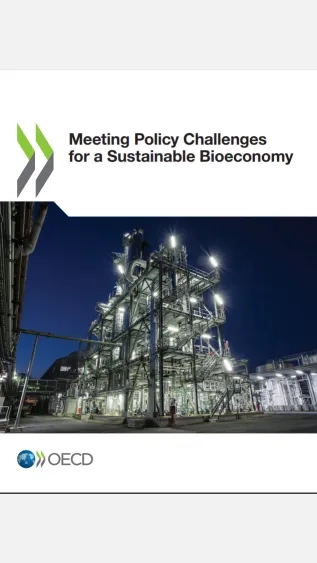
This publication Meeting Policy Challenges for a Sustainable Bioeconomy investigates key aspects surrounding the sustainability of bioeconomy development: the use of biomass as feedstock for future production.
The Green Growth Knowledge Platform (GGKP) Working Group on Behavioural Insights has released the working paper, Changing Behaviours, Changing Policy: Evidence on behavioural insights for green growth. The paper outlines steps that decision makers can take to ensure effective planning of behavioural interventions for green growth and presents case studies on initiatives that aim to achieve behaviour change in two key areas: sustainable consumption and resource use.