
This report provides the most up-to-date information on the disaggregated impacts of climate change for marine and inland fisheries and for aquaculture, in the context of poverty alleviation and the differential dependency of countries on fish and fishery resources. The work is based on model projections, data analyses, and national, regional, and basin-scale assessments. Overall, the results indicate that climate change will lead to significant changes in the availability and trade of fish products, with potentially important geopolitical and economic consequences, especially for those countries most dependent on the fisheries sector.
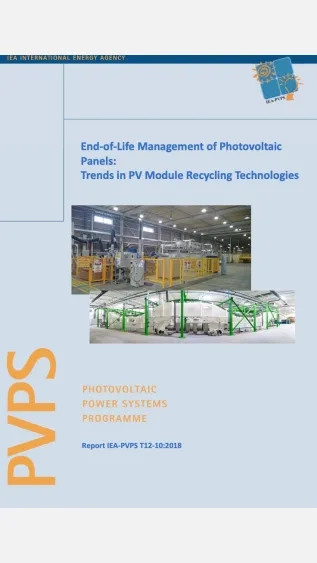
This report provides an international survey of trends related to the development of Photovoltaic (PV) module recycling technology from the perspective of both the private and public sectors.
The Country Progress Report - Vietnam situates Vietnam's sustainable banking journey within Sustainable Banking Network's Global Progress Report framework. The report assesses the country's emerging banking sector and calls for developing more practical guidance and encouraging local banks to learn from international good practices with regard to E&S risk management to further promote Vietnam's sustainable finance agenda.
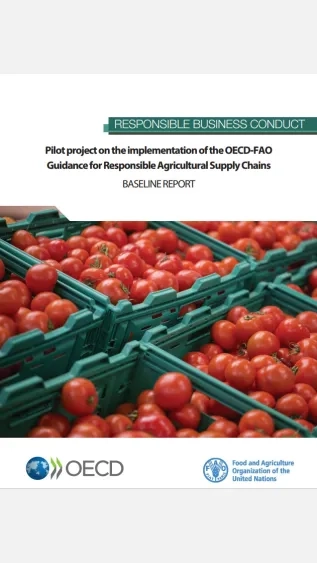
This report presents the findings of the baseline assessment on how companies and industries implement the OECD-FAO Guidance for Responsible Agricultural Supply Chains and other international related standards.
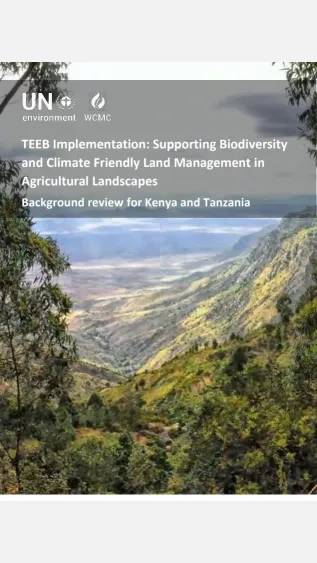
The aim of this report,TEEB Implementation: Supporting Biodiversity and Climate Friendly Land Management in Agricultural Landscapes - Background review for Kenya and Tanzania, is to assess the current knowledge on the values of biodiversity and ecosystem services in Tanzania and Kenya, to understand what can currently be readily assessed with respect to the interactions between climate change, biodiversity and agricultural development to look at major policy initiatives already in place in the environment and development space, and map key stakeholders.
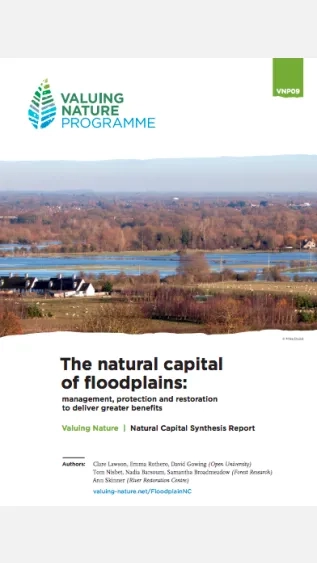
This report reviews the existing evidence, develops a matrix to inform land-use choices distilling the key information into a briefing document.