
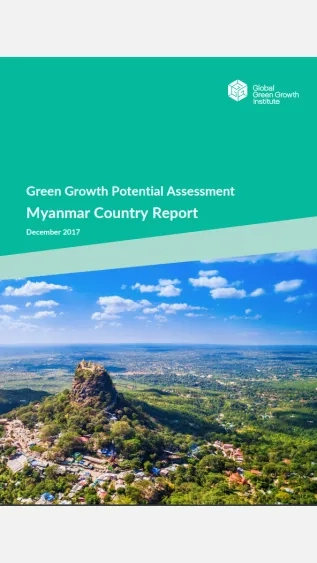
The Green Growth Potential Assessment (GGPA) is a diagnostic tool developed by the Global Green Growth Institute (GGGI) that consists of a combination of data analysis and stakeholder consultation in order to identify and prioritise a country’s opportunities for green growth. This report presents the findings of the GGPA for Myanmar. It reviews in detail the challenges and opportunities across a number of sectors, followed by recommendations for each of the green growth priorities.
Bangladesh has made important progress in a number of areas relating to environmental management but this has not matched the progress with the growth and poverty reduction agenda. Importantly Bangladesh is yet to adopt formally a “green growth strategy” that fully reconciles the development agenda with the protection of the environment. In the absence of the green growth strategy and associated regulations, policies and institutions, the costs of environmental degradation have grown over time. Additionally, the adverse effects of climate change are mounting and creating substantial downside risks and vulnerabilities. Against the backdrop of this, the government’s preparation of Vision 2041 under which Bangladesh is envisaged to reach World Bank-defined high income threshold by FY2041 and eliminate absolute poverty provides an important opportunity to take a fresh look at the environmental degradation and climate change risks.
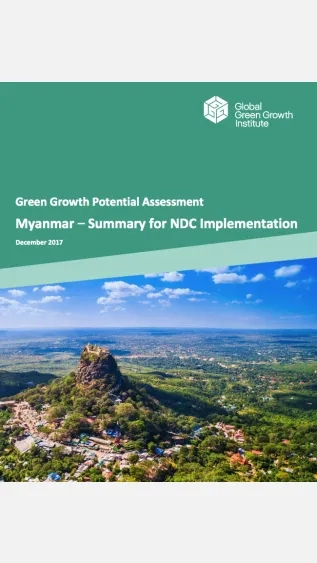
An assessment was conducted by the Global Green Growth Institute (GGGI) to identify Myanmar's specific opportunities and barriers in relation to green growth in six sectors. This summary report provides an overview of recommendations relevant for its Nationally Determined Contribution (NDC) implementation, focusing on related recommendations for agriculture, forestry and land use, energy, and education and governance.
This working paper, Achieving Sustainable Development Goals on Socially Inclusive and Sustainable Water through Fiscal and Pricing Reforms in Uruguay, explores fiscal policies for agricultural uses of water resources in Uruguay and carries out a modelling exercise to analyse the impacts of agricultural water use charges.
This Environment Policy Paper, Making the Slovak Republic a More Resource Efficient Economy, identifies a number of options for improving resource efficiency in the Slovak Republic.
Starting from the 2011 OECD Environmental Performance Review of the Slovak Republic, it builds on lessons from OECD work on sustainable materials management, resource productivity and green growth, developments in the European Union concerning the circular economy, and the outcomes of the 2016 high-level international Conference on “Transition to the Green Economy” organised under the Slovak EU Presidency.
The aim of the paper is to contribute to a policy debate on the actions and decisions that are needed for a transition towards a green economy in the Slovak Republic.
This report, Port Industry Survey on Climate Change Impacts and Adaptation , relates the key findings of the survey, together with some additional information about climate trends and climate-related impacts on seaports.