
A key challenge to achieving global climate change and sustainable development goals is how to bridge gaps between levels of finance required to achieve these goals, and the levels of finance currently invested in climate action and sustainable development. The ‘unlocking’ of private finance to fulfill sustainable development commitments offers significant potential as a prevailing solution.
This policy brief examines the extent to which current investment aligns with the figures regularly purported as required to fulfill global commitments. It shows a disconnect between global ambitions and financial realities, and that mechanisms by which such commitments will be fulfilled will likely require transformations across scales of geographies, policies, and economies. It identifies four key barriers to private investment, presents a financing overview, and provides three recommendations for expediting progress towards financing sustainable development.
The statistical report Energy Efficiency Indicators Highlights 2017 is designed to help understand what drives final energy use in IEA member countries in order to improve and track national energy efficiency policies.
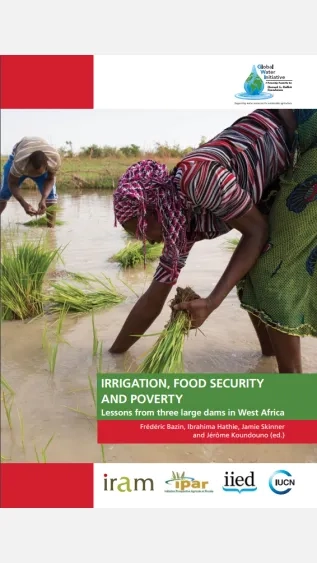
This report presents field evidence from three major public financing schemes for large-scale rice irrigation in West Africa. The report assesses the cost-effectiveness of the schemes, the quality of their management, and the persistence of poverty and food insecurity. It shows that answering questions including, “what type of farmers get the best results?”, “how big should plot sizes be and with what tenure conditions?” and “what credit and marketing systems would support farmers effectively?” are needed if production is to be sustainably improved.
The report aims to help decision makers understand project outcomes and optimize the returns on State investment, both for the taxpayer and for individual farmers. It makes recommendations for action and for the better alignment of public policy objectives with the interests of a diverse set of smallholder farmers, from making better use of existing systems to improving the design of future projects.
The report The Enabling Environment for Sustainable Enterprises in Guyana analyses how Guyana performs with respect to each pillar of a conducive environment for sustainable enterprises, assessing strengths and weaknesses.

The report Skills for Green Jobs Study – Guyana examines and reflects on Guyana’s experiences identifying, anticipating and responding to skills needs for green jobs as the country transitions to a green economy.
The paper International Trade Governance and Sustainable Transport: The Expansion of Electric Vehicles has been conceived as an exploratory scoping exercise intended to identify and better understand trade-related issues and knowledge gaps, including how various types of trade measures and policies affect the electric vehicle industry and its value chains.