
The forest brief The Bonn Challenge and the Paris Agreement: How can Forest Landscape Restoration Advance Nationally Determined Contributions? stresses some key messages on how IUCN's work in advancing forest landscape restoration (FLR) as a nature-based solution to climate change are contributing to national efforts for designing and implementing climate change action in the forest sector.
The paper Financing the Transition from Brown to Green: How to Track Country Performance Towards Low Carbon, Climate-Resilient Economies explores ways of financing the transition from brown, carbon-intensive models of economic development to low-carbon, green economies.
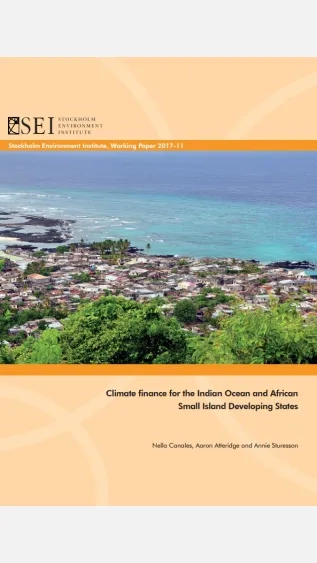
The report Climate Finance for the Indian Ocean and African Small Island Developing States analyses concessional international public flows of climate finance to Indian Ocean and African Small Island Developing States for the six years 2010–2015.
The authors examine the sources of climate finance, its distribution among recipient countries, the shares targeting adaptation and mitigation, the spread across sectors, the modes of delivery and intermediaries involved in programming the funds, as well as the share of committed funds that has been disbursed so far. For each country analysed – Cape Verde, the Comoros, Guinea-Bissau, the Maldives, Mauritius, São Tomé and Principe, and the Seychelles – detailed snapshots of climate finance are provided.
The report Power Shift: Shifting G20 International Public Finance from Coal to Renewables examines the public financing provided by G20 countries to developing countries, and whether their international actions to support clean energy are in line with their domestic actions.
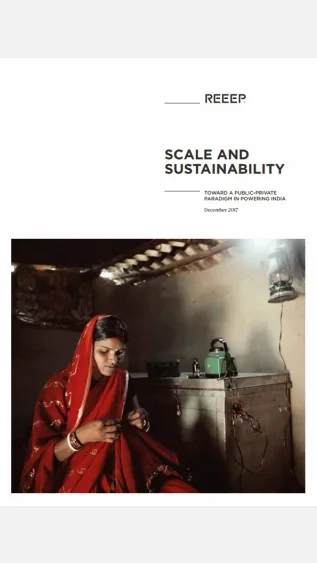
The paper Scale and Sustainability: Toward a Public-Private Paradigm in Powering India assesses the Decentralised Renewable Energy (DRE) market in India by looking at the supply, demand and framework conditions for the sector, and spells out potential approaches to levelling the playing field.
The paper How the WTO Can Help Tackle Climate Change through Fossil Fuel Subsidy Reform: Lessons from the Fisheries Negotiations assesses whether the WTO should have a role within the broader context of climate change and, more specifically, in advancing fossil fuel subsidy reform (FFSR).