
The paper Fossil Fuel Subsidy Reform in the WTO: Options for Constraining Dual Pricing in the Multilateral Trading System discusses the practice of energy dual pricing in the broader context of fossil fuel subsidy reform. The contribution explores avenues for constraining dual pricing, which is approached as a fossil fuel subsidy, within the framework of the WTO. It does so by proposing options under existing rules, as well as suggesting changes to the system beyond current rules.
The piece suggests that WTO members wishing to take action against dual-pricing policies maintained by other members could explore bringing a case to dispute settlement on the basis of specific provisions under the General Agreement on Tariffs and Trade (GATT), the Agreement on Subsidies and Countervailing Measures (ASCM) and/or the Anti-Dumping Agreement (ADA). Bringing a case would send a strong signal that dual-pricing policies are not immune to being challenged in a WTO dispute. Moreover, it is likely that this would function as a trigger to rapidly include talks on broader fossil fuel subsidy reform on the WTO agenda.
The Briefing Paper Accelerating Green Infrastructure Financing in Mexico: Towards Sustainable Economic Growth looks at the rationale for a new approach and the case for a green investment strategy.
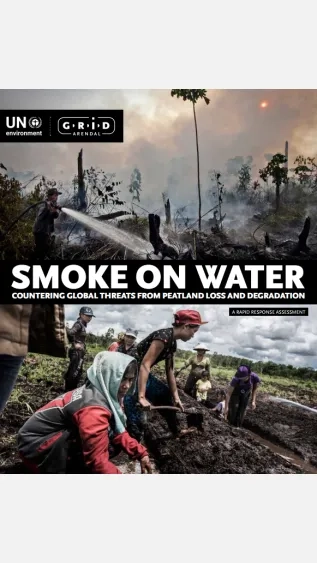
Smoke on Water – Countering Global Threats From Peatland Loss and Degradation is a Rapid Response Assessment that looks at peatland location, extent, threats and the policies to manage and protect them. The goal of this rapid response assessment, carried out on behalf of UN Environment and based on the efforts of more than 30 contributors, is to raise awareness about the importance of the world's peatlands and to encourage immediate action to preserve them.
The assessment supports the Global Peatlands Initiative and is based on existing data and information. Its main messages are:
1. Peatlands are important to human societies around the world. They contribute signicantly to climate change mitigation and adaptation through carbon sequestration and storage, biodiversity conservation, water regime and quality regulation, and the provision of other ecosystem services that support livelihoods.
2. Immediate action is required to prevent further peatland degradation and the serious environmental, economic and social repercussions it entails.
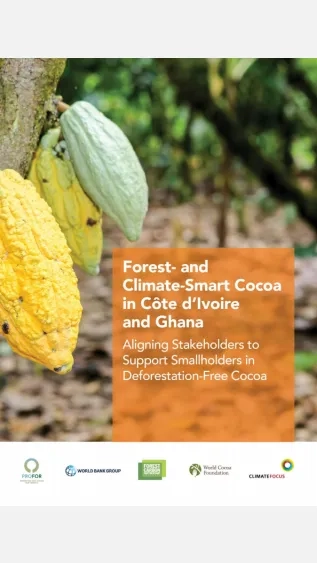
The focus of the report Forest- and Climate-Smart Cocoa in Côte d’Ivoire and Ghana is on actions that lead to scaling up renovation and rehabilitation (‘R&R’) efforts in Côte d`Ivoire and Ghana so farmers can grow more cocoa on less land.
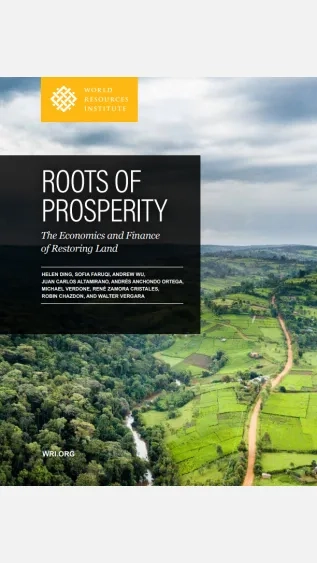
The report Roots of Prosperity: The Economics and Finance of Restoring Land provides a comprehensive analysis of the benefits and costs of restoring forests and landscapes in countries around the world, demonstrating how smart policies and innovative financing can help governments meet their restoration targets.
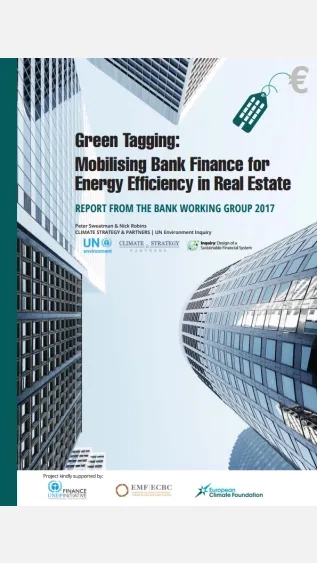
The report Green Tagging: Mobilising Bank Finance for Energy Efficiency in Real Estate presents the findings and recommendations from a survey of green tagging practices among 10 European banks. It finds that green tagging around real estate and energy efficiency is growing at a critical time.