
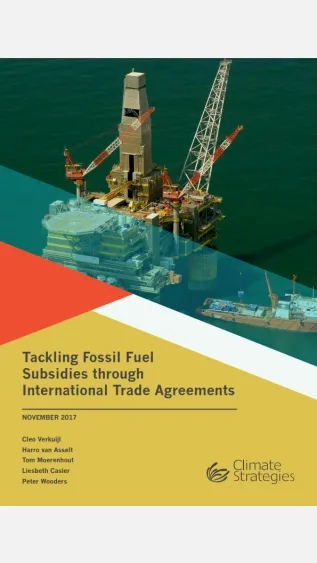
The report Tackling Fossil Fuel Subsidies through International Trade Agreements analyses the compatibility of five selected fossil fuel support measures in the Group of 20 (G20) countries with the WTO’s 1994 Agreement on Subsidies and Countervailing Measures (ASCM). The exercise has never been attempted before, and doing so, it identifies some of the key legal questions and challenges faced at the WTO.
Specifically, the findings highlight the difficulty of litigating fossil fuel consumption subsidies, measures that remain substantial. While enhanced transparency could help address some of the challenges complainants may face, fossil fuel subsidy notification rates within the WTO system remain disappointingly low.
In light of these shortcomings, the paper identifies five complementary avenues for reform of international trade policy to enable countries to better address fossil fuel subsidies:
The study Policy Options for Improving Drought Resilience and Its Implication for Food Security: The Cases of Ethiopia and Kenya presents and critically examines the drought policies and institutional frameworks of two African countries frequently challenged by droughts - Ethiopia and Kenya.
The paper Increasing the Value of Climate Finance in An Uncertain Environment: Diaspora Financial Resources as a Source of Climate Finance for Sub-Saharan Africa undertook an analysis of project reports, policy reviews, policy briefs, and academic literature reviews on the barriers and opportunities for private investments in climate change programmes.
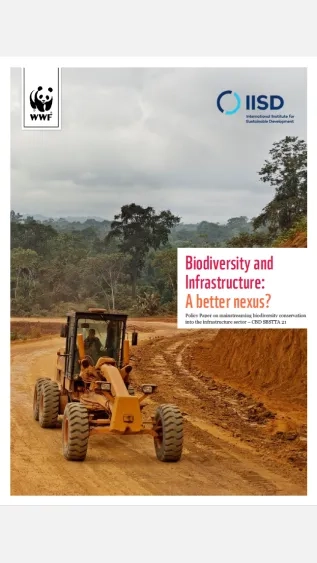
The paper Biodiversity and Infrastructure: A Better Nexus? discusses the catalytic opportunities for integrating biodiversity conservation into infrastructure development, particularly through the use of nature-based solutions and natural infrastructure.
The report The Wealth of Nature: Increasing National Wealth and Reducing Risk by Measuring and Managing Natural Capital considers the linkages between natural capital and human prosperity.
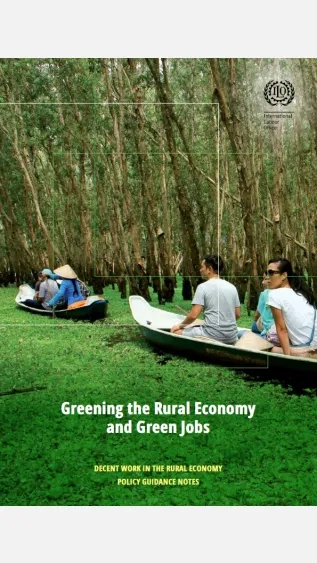
The policy guidance note Greening the Rural Economy and Green Jobs focuses on a number of areas that are at the heart of rural economies and could be engines for a sustainable economic transformation. These are: a) powering the rural economy through access to clean energy; b) revitalizing agriculture through sustainable and high productivity farming methods; c) fostering sustainable tourism; d) restoring ecosystems for productivity, income and resilience; e) implementing social protection and just transitions programmes to offset the negative effects of development policies; and f) stimulating social dialogue for an effective, inclusive and productive transition to sustainable economies. These are policy areas in which the ILO has accumulated solid policy and project experience, building comparative advantage in line with its mandate in promoting sustainable socio-economic development.