
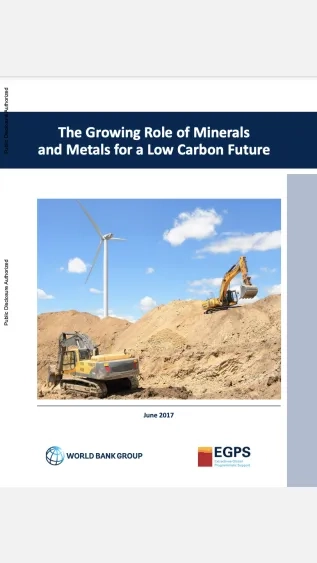
Climate and greenhouse gas (GHG) scenarios have typically paid scant attention to the metal implications necessary to realize a low/zero carbon future.
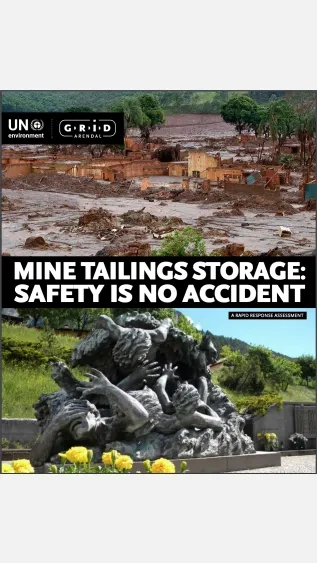
Acknowledging community concerns over the impact of tailings dam failures, such as at Mount Polley and Samarco, this report seeks to examine and explain why tailings dam failures continue to occur. It provides an accessible and balanced description of the complexities surrounding tailings dam failures, informing the global community of the issues. Sixteen years on from the 2001 International Commission on Large Dams (ICOLD) “Tailings Dams: Risk of Dangerous Occurrences” report, it gives an update on the status of reforms and provides momentum and direction for advancing the shared ambition of eliminating tailings dam failures. It also provides an overview of the key issues, using case studies to illustrate causes and consequences of tailings dam failures, the progress of reform and the need for a coordinated stakeholder response.
The report The Potential Role of Enhanced Bond Structures in Forest Climate Finance sets out a detailed shortlist of three potential enhanced bond structures, which have the potential to catalyze funding across the gamut of forest-based nationally determined contribution (NDC) activities. The focus is on bond structures that blend donor-funded performance-based payments (PBP) alongside some upfront grant funding to improve the financial performance of the use of proceeds for issuers, and hence enable larger-scale financing from capital markets.
The Financial Centres for Sustainability Reviewing Experience and Identifying Options in the G7 report has been prepared as part of Italy’s G7 Environment programme to explore how financial centres can contribute to the delivery of the Sustainable Development Goals (SDGs) and the Paris Climate Agreement.
The authors study the impact of institutional characteristics of national and supranational regulation on the effectiveness of both types of regulation. The focus is on four institutional dimensions: regulatory capacity, accountability, commitment and fiscal capacity. It is shown how supranational regulation may reduce or worsen the challenges imposed by national institutional weaknesses. The analysis allows an identification of the costs and benefits of supranational regulation in very diversified institutional contexts. It also explains why some desirable changes from a global welfare perspective are unlikely to take place unless the losers of market integration are somehow compensated when national regulation is unlikely to do so as a result of some of its weaknesses.

The Global Cleantech Innovation Index (GCII) programme investigates where, relative to GDP, entrepreneurial clean technology companies are most likely to emerge from over the next 10 years – and why. Drawing on a wide range of factors and sources, the study "The Global Cleantech Innovation Index 2017: Which countries look set to produce the next generation of start-ups?" seeks to answer the same question as the 2012 and 2014 GCII reports, namely: which countries currently have the greatest potential to produce entrepreneurial cleantech start-up companies that will commercialize clean technology innovations over the next 10 years? Based on the data contributing to 15 indicators of creation, commercialisation and growth of cleantech start-ups in 40 countries, the study identifies different key trends and shows which countries are falling ahead and below the curve for cleantech innovation.