
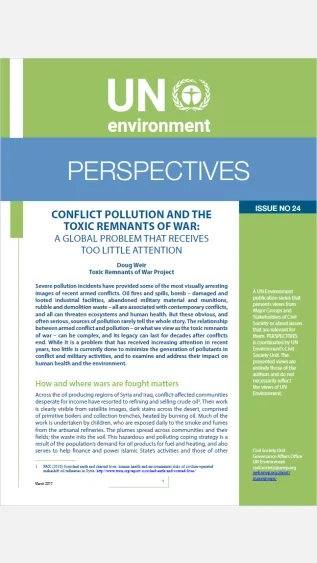
Severe pollution incidents have provided some of the most visually arresting images of recent armed conflicts. Oil fires and spills, bomb-damaged and looted industrial facilities, abandoned military material and munitions, rubble and demolition waste – all are associated with contemporary conflicts, and all can threaten ecosystems and human health. But these obvious, and often serious, sources of pollution rarely tell the whole story. The relationship between armed conflict and pollution – or what we view as the toxic remnants of war – can be complex, and its legacy can last for decades after conflicts end. While it is a problem that has received increasing attention in recent years, too little is currently done to minimize the generation of pollutants in conflict and military activities, and to examine and address their impact on human health and the environment.
This paper Can Roads Contribute to Forest Transitions? offers an opportunity to explore road-forest relationship.
Interventions on green space in urban settings can help address public health issues related to obesity, cardiovascular effects, mental health and well-being. However, knowledge on their effectiveness in relation to health, well-being and equity is incomplete. To explore the effectiveness of urban green space interventions to enhance healthy urban environments, the WHO Regional Office for Europe reviewed research findings, local case studies and Environmental Impact Assessment/Health Impact Assessment experiences, and assessed their impacts on environment, health, well-being and equity.
The report "Urban Green Space Interventions and Health: A review of impacts and effectiveness" provides the three working papers prepared for a meeting, and presents the discussion and conclusions on what intervention components have been found to be effective in maximizing the environmental, health and equity benefits derived from urban green spaces.
To access the related policy brief "Urban green spaces: a brief for action", click here.
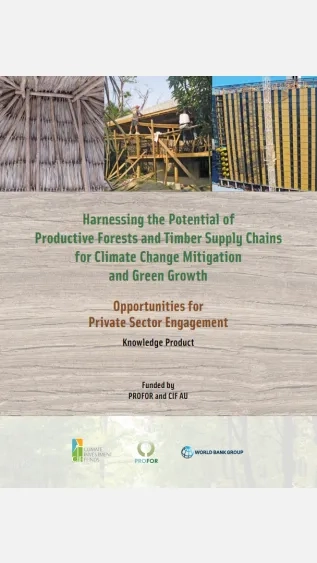
The report "Harnessing the Potential of Productive Forests and Timber Supply Chains for Climate Change Mitigation and Green Growth" evaluates opportunities for harnessing the potential for climate mitigation and green growth in the forest sector. The analysis focuses on mitigation benefits related to carbon storage in planted forests, harvested wood products (HWP), and the substitution of materials. This emphasis on the role of forestry in climate mitigation in developing countries fills an analytical gap—until now, the role of the productive forest sector has largely been ignored. In addition, the analysis quantifies the climate change adaptation benefits of investments in the HWP supply chain, such as creating economic opportunities and increasing resilience.
Under current conditions, the supply of HWP is unlikely to keep up with expected demand. Increasing economic and population growth in the study countries will drive greater consumption of HWP. Without making the recommendations suggested in this report, increasing consumption will result in large HWP supply gaps.
This publication Money Where it Matters: Financing the Sustainable Development Goals and Paris Agreement through local finance focuses on local finance issues in urban and rural settings, in the context of climate, energy and natural resources.
This report provides an analysis of how climate change damages may affect international trade in the coming decades and how international trade can help limit the costs of climate change. It analyses the impacts of climate change on trade considering both direct effects on infrastructure and transport routes and the indirect economic impacts resulting from changes in endowments and production. A qualitative analysis with a literature review is used to present the direct effects of climate change. The indirect impacts of climate change damages on trade are analysed with the OECD’s ENV-Linkages model, a dynamic computable general equilibrium model with global coverage and sector-specific international trade flows. By building on the analysis in the OECD (2015) report "The Economic Consequences of Climate Change", the modelling analysis presents a plausible scenario of future socioeconomic developments and climate damages, to shed light on the mechanisms at work in explaining how climate change will affect trade.