
The Green Growth Potential Assessment (GGPA) is a rapid diagnostic tool that lays out the appropriate green growth interventions based on solid understanding of a country’s key development challenges in various green growth areas.
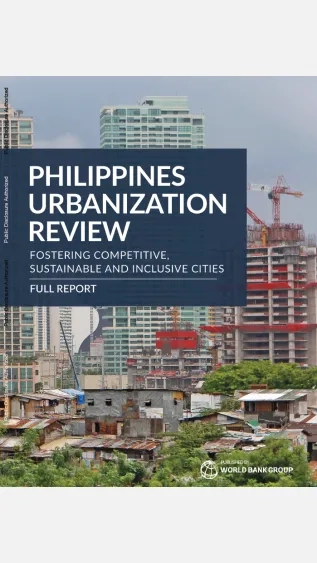
The Philippines is at a critical juncture in its urbanization process with the number of people living in cities projected to increase by approximately 20 million over the next 20 years. Decisions made now will affect how that urbanization takes place, how cities grow, how vibrant they are, and the extent to which they contribute to improving the lives of tens of millions of residents. Bold policy reforms are needed at both the national and local level too leverage enormous opportunities for growth, job creation and poverty reduction and to avoid the risk of congestion, slums, pollution, inequality and crime.
Managing Coastal Ecosystems in the Philippines: What Cash for Work Programmes Can Contribute compares three incentive schemes that may induce resource users to protect or rehabilitate coastal resources: Payments for Ecosystem Services, Environmental Conditional Cash Transfers and Cash for Work.
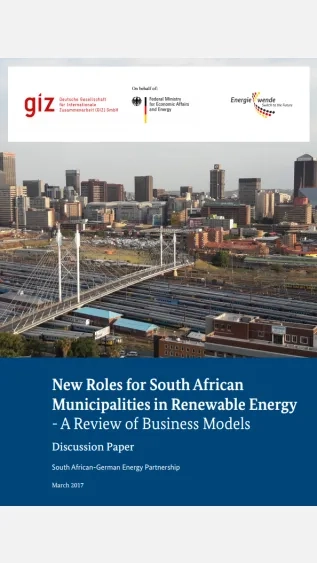
The Discussion Paper New Roles for South African Municipalities in Renewable Energy - A Review of business models reviews possible business models for South African municipalities to seize arising opportunities and minimise potential risks associated with the introduction of renewable energy technologies in the domestic electricity system. It proposes a typology of available business models for municipalities to seize emerging opportunities arising from renewable energy technologies. Three overarching roles, spilt into seven business models, are considered for municipalities: building electricity generation capacity; procuring electricity; and playing a facilitation function. Based on a three-pronged methodological framework taking into account the drivers of the business models; their techno-economic potential; and their ability to manage risks (regulatory, financial and socio-political); this report reviews each business model, highlighting their strengths and weaknesses.
The working paper Delivering real change: getting international climate finance to the local level explores the flows of climate finance within the main international climate funds, to understand how effective they are in getting finance to the local level and what design features enable or prevent local financing. It distils lessons from development funds that are experienced in local financing. It concludes by highlighting the ways in which local climate financing can be enhanced – to further improve the effectiveness of aid.
The experimental ecosystem accounts for Uganda presented in this report follow on from a recent publication which explored approaches to accounting for species-level biodiversity and a feasibility study of applications using existing data in Uganda. The accounts compiled respond to policy entry points for biodiversity and ecosystem related concerns in Uganda.