
There has traditionally been a reluctance in the United Nations (UN) system to engage with religion. With governments that range from theocracies and nations with state religions to secular states and those that are antireligion, it is not a propitious domain for diplomacy. In addition, especially for organizations that are science-based like UN Environment, the historical antagonism of science and religion has not helped, with emotional views on both sides, and religion seen as unscientific if not dangerous.
A healthier view might acknowledge their complementarity as two knowledge systems dealing with different aspects of human experience. Faith-based organizations have long been accredited to the Department of Public Information and the Economic and Social Council, but they have simply been seen as part of the NGO Major Group, and appreciated for their usefulness in project implementation. The possibility that they might have something special to contribute to UN processes has been ignored.
Increasing agricultural productivity can have ambiguous effects on forest protection in theory: it can expand the scope of farming, which is detrimental to the forest, but it can also induce farmers to intensify their production. The authors examine these predictions using county-level data from five waves of the Brazilian Census of Agriculture. The authors identify productivity shocks using the expansion of rural electrification in Brazil during 1960-2000. The authors show that electrification increased crop productivity, and farmers subsequently both expand farming through frontier land conversion, but also shift away from land-intensive activities and into capital- and labor-intensive activities. The net effect depends on the county’s land use prior to the increase in agricultural productivity, but it reduces deforestation in the typical county in the sample.
The paper On the Role of Central Banks in Enhancing Green Finance examines the role of central banks in ‘greening’ financial systems.
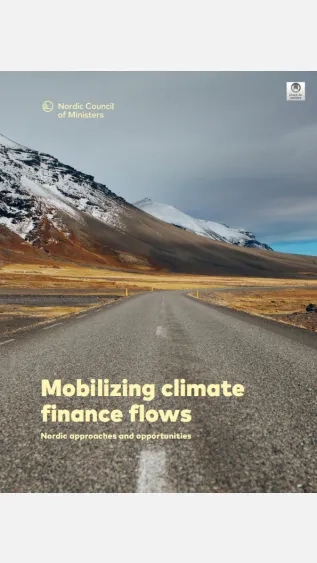
If the Agreement’s goal - limit the global temperature increase below 2°C - is to be met, all financial flows need to shift dramatically and rapidly from current investment patterns to 2°C compatible pathways. This study analyses the roles Nordic actors might play in mobilizing finance flows internationally and outlines a roadmap that can guide joint Nordic action during the next five to ten years. While the roadmap covers components of “climate-related ODA” and climate compatible contributions from the private sector, the focus of the roadmap lies on the crucial bridging and dialogue that is required between key actors. Building on identified Nordic strengths and areas needing accelerated international support, the report concludes with a set of immediate next steps to operationalize the roadmap in 2017-2018.
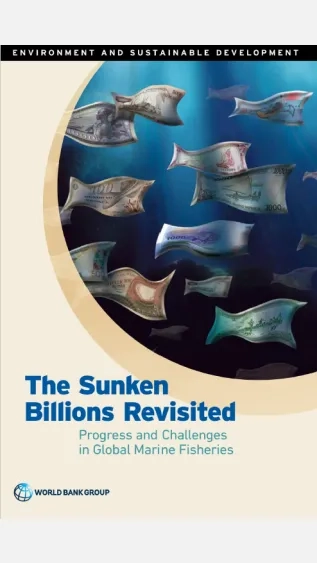
Global marine fisheries are in crisis. The proportion of fisheries that are fully fished, overfished, depleted, or recovering from overfishing increased from just over 60 percent in the mid-1970s to about 75 percent in 2005 and to almost 90 percent in 2013. Biological overfishing has led to economic overfishing which creates economic losses. To quantify the value of this economic loss, in 2009 the World Bank and the Food and Agriculture Organization of the UN (FAO) published a study on the economic performance of global fisheries, The Sunken Billions: The Economic Justification for Fisheries Reform.
This report compares Green Public Procurement (GPP) programs from four leading Asian countries (China, Japan, Korea and Thailand) to understand what the frameworks and key success factors that result in high-impact green and sustainable procurement are. It looks at their commonalities and differences with the goal of informing a more effective implementation of green procurement policies and programs across Asia. It will be beneficial for other countries in the early stages of promoting and implementing green public procurement, and it will give practitioners insights into the tools and approaches used to implement and promote it.