
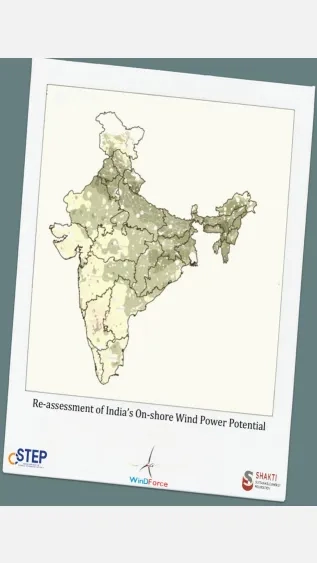
Until recently, the on-shore wind power potential in India was officially estimated to be 102 GW at a hub height of 80 m. About 26 GW of this potential has been installed in the country. However, there are multiple independent reassessment studies in the public domain that estimate the potential to be much higher. This is due to variations in assumptions and methodologies used. The main characteristic of these studies is that they take into account Land Use Land Cover (LULC) classifications and use a GIS-based methodology to estimate the wind power potential across the country. In order to achieve the national target of adding 60 GW of wind power capacity by 2022, it would be important to reassess the technical on-shore wind potential in the country and identify areas where the potential can be harnessed optimally. This would also be required to design and implement effective policies for capacity deployment. In this context, a Committee was constituted by the MNRE with an objective to reassess the technical on-shore wind potential of India for all major land types at a hub height of 100 and 120 m.
Existing flows of global climate finance (at least $391 billion per year) are sourced primarily from Development Finance Institutions (DFIs) and project developers themselves. A substantial ‘investment gap’ remains between the existing levels of climate finance, and those required to achieve the requisite level of decarbonisation to maintain a 2°C pathway (over $1 trillion per year). Institutional investors hold the greatest potential for filling the investment gap because they hold about $93 trillion worth of assets and seek long- term, stable returns, which are potentially available for climate finance investments. They currently contribute little to existing climate finance flows (~0.2%). Further research by the GREEN-WIN project seeks to determine how to effectively develop the drivers and alleviate the barriers faced by institutional investors for deploying the finance required to develop the low-carbon, climate-resilient economy.
A new paper by World Resources Institute finds strong interest and opportunities for sustainable investing within the US institutional investor marketplace. But key barriers persist.
In the context of falls in extractive commodities prices since 2011, this paper examines the history of thinking about the interplay between extractives and economic development.
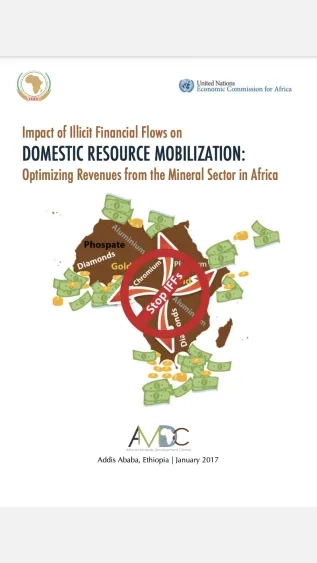
The recent furor over the massive cache of leaked documents has galvanized global attention on the impact of illicit financial outflows on domestic resource mobilization. However, renewed impetus for change will require complementary analytical and strategic work and effective concerted actions.
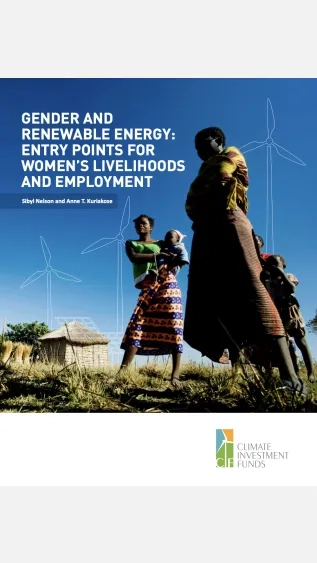
This report explores the gender issues in the renewable energy project sector, highlighting the benefits gender-mainstreaming can bring to communities.