
The report, Achieving "Growth Within", focuses on the mobility, food and built environment value chains, which together represent 60% of consumer expenditure and 80% of resource use.
To understand the link between development and climate-fragility risks in Asia, this brief presents the findings of a survey conducted with development practitioners and experts from a range of developing and developed countries.
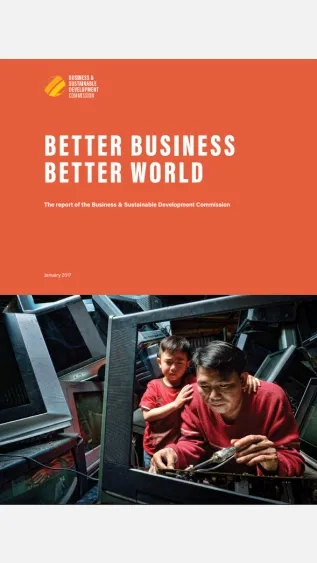
Better Business Better World: The report of the Business & Sustainable Development Commission makes the business case for sustainable development as a core business strategy, sharing insight from 35 business leaders and civil society representatives on how to create a new, socially focused business model that reaches parts of the global economy previously left largely to public aid.
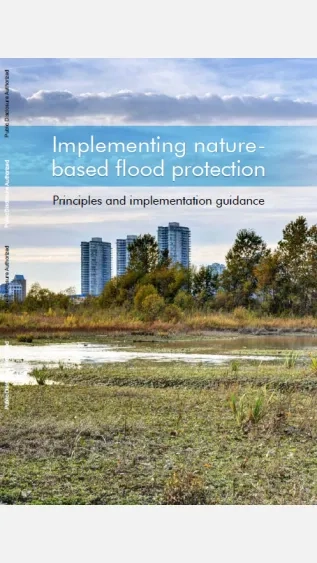
Effective flood risk management is critical to protect people and their livelihoods from flooding and to limit future losses. Nature-based measures and their ability to address flood risk are receiving increasing attention. Until recently, most flood risk management involved conventional engineering measures. These measures are sometimes referred to as “hard” engineering or “gray” infrastructure. Examples include building embankments, dams, levees, and channels to control flooding. Recently the concept of “nature-based solutions”, “ecosystem-base adaptation”, “eco-DRR” or “green infrastructure” has emerged as a good alternative or complement to traditional gray approaches. Nature-based solutions make use of natural processes and ecosystem services for functional purposes, such as decreasing flood risk or improving water quality. The objective of this document is to present five principles and implementation guidance for planning, such as evaluation, design, and implementation of nature-based solutions for flood risk management as an alternative to or complementary to conventional engineering measures.
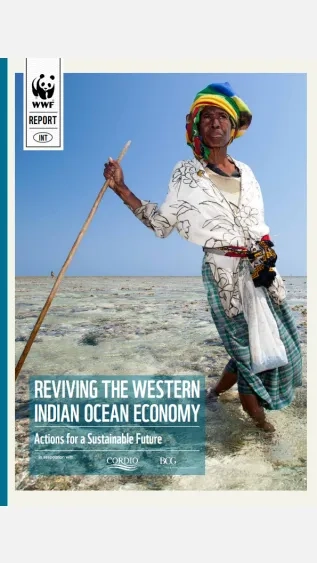
This report Reviving the Western Indian Ocean Economy: Actions for a Sustainable Future details the values of the ocean assets, the growing threats they face and the priority actions needed to provide a more certain and sustainable future for its people.
Human demands on Earth’s natural resources have outpaced what can be produced. A shift to more sustainable growth is dependent on changes in current patterns of both production and consumption. While recent policy has largely focused on addressing production and supply, consumption and demand must also be addressed. Today, in less than nine months, we consume more resources than our planet produces in a year, and our rate of consumption continues to grow.
The objective of this publication is to shed light on opportunities to strengthen the effectiveness of policies for sustainable consumption in both developed and developing countries. The publication provides evidence-based insights from behavioural science, detailing five key behavioural barriers to sustainable consumption. It also includes concrete examples of how behavioural science has been successfully coupled with policy to cost-effectively achieve sustainable consumption.