
The increasingly interconnected nature of the global economy means that the impacts of climate change mitigation measures, or response measures, are not confined within the borders of countries implementing them. Such impacts will become of even more and growing importance under the decentralised and increasingly ambitious new climate regime. This policy brief explores the issue of response measures in the context of the post-Paris climate regime from a practical and policy-relevant perspective, examining different options on how the issue may evolve.
This working paper Climate Finance in the Pacific: An Overview of Flows to the Region’s Small Island Developing States presents an analysis of climate finance flows to Pacific Island states in 2010–2014, collectively and by country, as well as more recent data on flows from multilateral climate funds.
This Policy Paper describes the relatively new phenomenon of publicly-capitalised green investment banks and examines why they are being created and how they are mobilising private investment. It draws on the OECD report “Green Investment Banks: Scaling up Private Investment in Low-carbon, Climate-resilient Infrastructure".
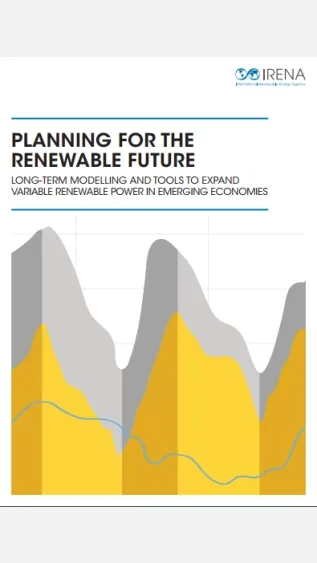
Ambitious national commitments, international agreements, and rapid technological progress have prompted countries around the world to turn increasingly renewable energy to expand their power infrastructure. However, the variability of solar and wind energy – two key sources for renewable power generation – presents new challenges.
Proactive energy planners will address the challenges of variable renewable energy (VRE) integration directly, starting with long-term investment choices. Techno-economic assessments can help to inform policy development and set optimal targets for renewable power uptake. Scenario modelling, meanwhile, has become a critical planning tool for the power sector, with considerable knowledge being acquired in certain markets on how to represent VRE in long-term models.
This report highlights the findings from AVRIL (“Addressing Variable Renewable Energy in Long-term Energy Planning”), a project by the International Renewable Energy Agency (IRENA) that has identified the best practices in long-term planning and modelling to represent high shares of VRE.
This economic analysis report is structured around two arguments. Firstly, natural resources and ecosystem services in particular have significant contribution to economic growth and poverty reduction. Secondly, failure to manage natural resources, conserve and protect the ecosystem will result in costs of degradation that will compromise medium and long term sustainable development. An ecosystem services approach has been used which is capable of capturing aspects of the environment and natural resources that are usually neglected either because they do not have market values or they cannot readily be quantified. The approach is supported by Case Studies of Rugezi Wetlands and Gishwati Forest.
This report includes information on the barriers that SMEs face to take part in green public procurement as well as recommendations on addressing the barriers to SMEs' integration in GPP to meet environmental benefits while improving SMEs environmental performance.