
The report, Fintech and Sustainable Development - Assessing the Implications, assesses how the financial system’s core functions are likely to be disrupted by financial technology (“fintech”) innovations and how they could help – or hinder – efforts to align financing with sustainable development.
Investments in sustainable infrastructure are lagging behind the needs described and those that are being made are not as sustainable as they should be. This is partly because such infrastructure is long-term, requires large upfront investments, and generates cash flows only after many years. The report Delivering On Sustainable Infrastructure For Better Development And Better Climate assesses the constraints that are holding back the scaling of sustainable infrastructure and how to vastly expand infrastructure while avoiding the mistakes of the past.
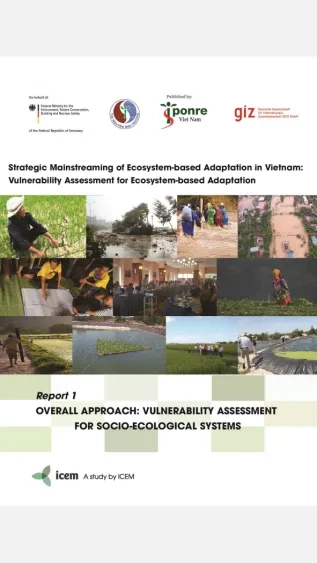
This report Strategic Mainstreaming of Ecosystem-based Adaptation in Vietnam: Vulnerability Assessment for Ecosystem-based Adaptation sets out the overall EbA vulnerability assessment approach as it is being developed and tested.
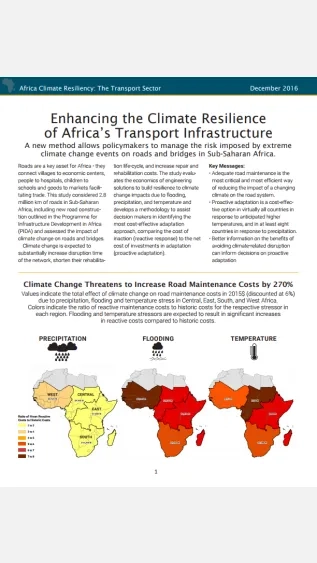
Roads are a key asset for Africa - they connect villages to economic centers, people to hospitals, children to schools and goods to markets facilitating trade. This study considered 2.8 million km of roads in Sub-Saharan Africa, including new road construction outlined in the Programme for Infrastructure Development in Africa (PIDA) and assessed the impact of climate change on roads and bridges. Climate change is expected to substantially increase disruption time of the network, shorten their rehabilitation life-cycle, and increase repair and rehabilitation costs. The study evaluates the economics of engineering solutions to build resilience to climate change impacts due to flooding, precipitation, and temperature and develops a methodology to assist decision makers in identifying the most cost-effective adaptation approach, comparing the cost of inaction (reactive response) to the net cost of investments in adaptation (proactive adaptation).
Key Messages:
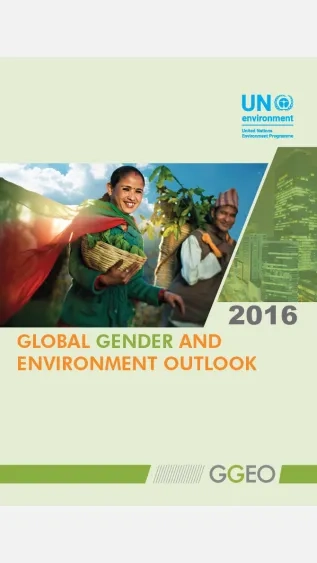
The Global Gender and Environment Outlook is for the first time provide a comprehensive overview of the linkages between gender and environment in the contexts of SDGs and 2030 Development agenda. It is expected to enable better understanding of the environment through a gender lens, support better integration of gender perspectives in development and implementation of environmental policies at international and national levels, and drive impact through partnerships.
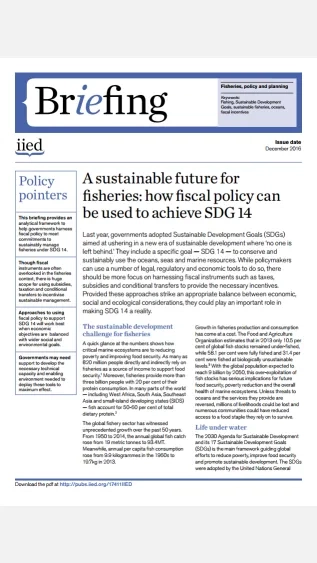
The report A Sustainable Future for Fisheries: How Fiscal Policy Can Be Used to Achieve SDG 14 focus on harnessing fiscal instruments such as taxes, subsidies and conditional transfers to provide the necessary incentives.