

Low carbon development has gained policy prominence and is a concern of both environment and development policy globally and in China and India. This paper discusses the role of China and India as important global actors in light of development imperatives in the two countries. The article then looks at emerging approaches in the two countries related to financing, science, technology & innovation policy, and sub-national actions. The objective is to review efforts in China and India for contributing to learning experiences for other countries. The final section discussed the ways forward in terms of examining the role of China and India in terms of national policy strengthening as well as in global agenda setting. Implementation of sub-national initiatives in both countries faces challenges due to lack of adequate financing as well as knowledge such as greenhouse gas inventories and disaggregated resource and socio-economic assessments.
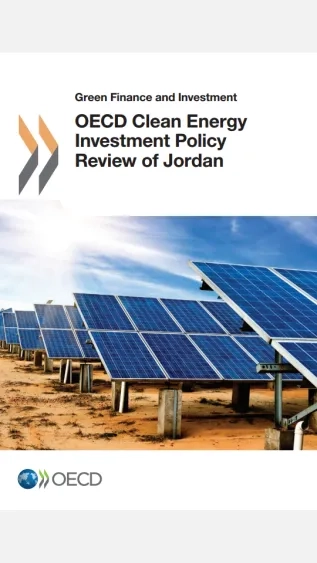
Scaling up investment in renewable power can significantly contribute to addressing many of Jordan’s crucial challenges. These include: sustaining economic growth; improving energy security and reducing fossil-fuel consumption and imports; and reducing fiscal pressure linked to costly support to fossil-fuel imports. Unlike some of its neighbours in the Middle East and North Africa (MENA) region, Jordan has few fossil fuel resources of its own and imports around 96% of its total primary energy supply. Concerns over energy security and fossil-fuel imports dependency have intensified in Jordan due to political events in the region, including gas supply interruptions since 2011, and more recently, the rapid growth in energy demand caused by a large influx of more than one million refugees and asylum seekers, mostly from Syria and Iraq.
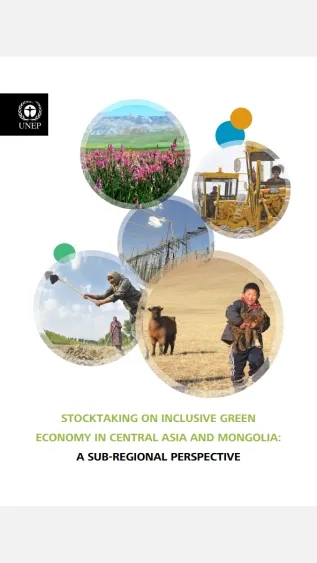
Stocktaking on Inclusive Green Economy in Central Asia and Mongolia: A Sub-Regional Perspective was produced as part of the United Nations Environment Programme (UNEP) project “South-South Cooperation in Mongolia and Central Asian Countries: Sharing Knowledge on Inclusive Green Economies”. The project aimed to support Mongolia and Central Asian countries in developing their research capacity in the area of Green Economy and Ecological Civilisation and to share this knowledge with decision-makers and technical experts through knowledge exchange between China, Central Asian countries, and Mongolia.
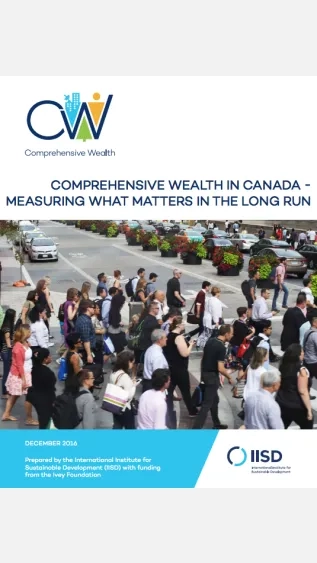
Comprehensive wealth focuses on the role of people, the environment and the economy in creating and sustaining well-being. Complementing indicators like gross domestic product (GDP) and addressing issues the can’t capture on their own, comprehensive wealth measures are key to successfully guiding Canada through the 21st century and beyond.
This study, Comprehensive Wealth in Canada - Measuring what matters in the long run, reviewed Canada’s comprehensive wealth performance over the 33-year period from 1980 to 2013. This timeframe extends well beyond business and political cycles, ensuring that the results reveal trends free from the ebb and flow of markets and policies. The report found that comprehensive wealth grew slowly in Canada between 1980 and 2013 (0.19 per cent annually in real per capita terms). This was in contrast to relatively robust growth in real per capita consumption of goods and services (1.36 per cent annually). The divergence between these two trends points to potential concerns for long-term well-being.
In terms of the components of comprehensive wealth:
Climate change is relevant to virtually all other SDGs, including Goal 8 on decent work and economic growth. Uncontrolled climate change will not only compromise the ability of countries to achieve this goal, but could reverse gains in economic prosperity, social progress and poverty reduction. Economic sectors particularly vulnerable, such as agriculture, are among the biggest employers. Besides, risks tend to be greater for workers and communities already in situations of vulnerability, including workers in the informal economy, indigenous and tribal peoples, migrant workers, women and youth.
Innovative financial mechanisms, though widely discussed in the international community, are still relatively uncommon and little information is tracked at the project level, which is where innovation in financial structuring actually occurs. However, when deployed in the markets with robust financial policy frameworks in place, innovative financial mechanism have demonstrated the potential to successfully blend public and private capital as means to mitigate high investment risks, thereby unlocking greater private sector investment in climate projects. To replicate this initial success and deploy them at scale, GGGI believes that policymakers, public financial institutions, and other stakeholders must first appreciate the function, characteristic, and use of such mechanisms, specifically in the context of the project development lifecycle.