
The countries of the Association of Southeast Asian Nations (ASEAN) have been very active in promoting energy efficiency (EE) and renewable energy (RE) technologies in order to fulfil their global commitment on climate change. In the ASEAN Plan for Action for Energy Cooperation 2016-2025 (APAEC), EE and RE are key program areas to be addressed.
In this vein, examples of actions include feed-in tariffs (notably in Thailand and Malaysia) and the liberalization of the electricity market. In relation to EE, ASEAN member countries are progressively adopting Minimum Energy Performance Standards (MEPS) with EE standard and labelling programs. ASEAN member countries coordinate their energy policies through the ASEAN Energy Efficiency & Conservation Sub-Sector Network (EE&C-SSN) and the Renewable Energy Sub-Sector Network (RE-SSN). Both are composed of government agencies acting as program coordinators, and report to the Senior Officials Meeting on Energy (SOME) and the ASEAN Ministers on Energy Meeting (AMEM).
This report examines the opportunities for American businesses and investors in a clean energy economy. It presents technology choices and outlines near- and medium-term investment opportunities across nine U.S. census regions. It finds that lowering climate risk by building a clean energy economy is technically and economically achievable using commercial or near-commercial technology.
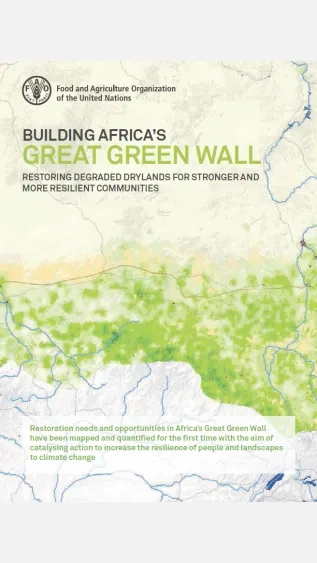
This publication Building Africa’s Great Green Wall: Restoring Degraded Drylands for Stronger and More Resilient Communities presents efforts by the Food and Agriculture Organization (FAO) and its partners on mapping the intervention area of the Great Green Wall initiative.
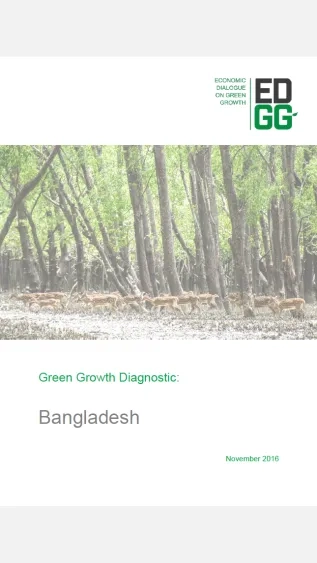
This report seeks to generate evidence on the binding constraints to shifting Bangladesh’s current economic strategy to one aiming at green growth. Specifically, it is critical that Bangladesh decouples its economy from the negative environmental effects of the economic growth path it is currently pursuing. It is important that green growth is pursued in order to unlock Bangladesh from its unsustainable growth path to a more sustainable and inclusive one.
This paper uses a novel approach which has not been trialled elsewhere- the Green Growth Diagnostic. This methodology will help Bangladesh develop its strategy to pursue an economic growth path that takes full account of natural resources and promotes sustainable development. This report will demonstrate and highlight the constraints that need to be addressed in order to do so.
Trade and Environment Review 2016: Fish Trade examines issues pertinent to the promotion of sustainable use of living marine resources in healthy oceans and seas, bringing together a collection of independent articles by 24 leading experts and practitioners on fish governance systems; fish harvest, production and consumption; unsustainable fishing practices; fish and marine ecosystems management; and fish trade.
This report presents the results of a review exercise covering Green Economy (GE) strategies and Sustainable Development (SD) policies in almost all Mediterranean countries. An extensive literature review was conducted over a three-month period followed by a methodological assessment of the findings which was complemented by an on-line survey addressed to key regional and national GE/SD actors that brought in useful insights on what is happening on the ground in the countries. Based on these findings and the valuable inputs of an expert workshop that took place in Morocco (Tangier, 20 July 2016) this document proposes a number of concrete recommendations that aim to accelerate the much needed transition towards a Green Economy in the Mediterranean region.