
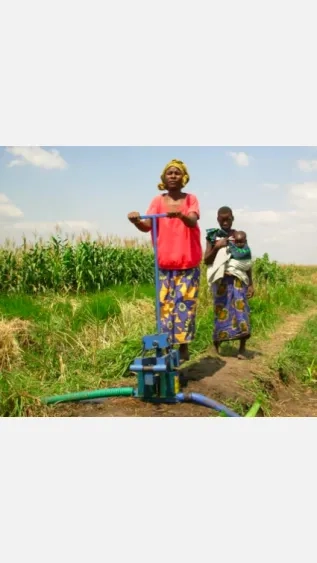
This policy brief draws on the findings from the report and makes an economic case for investing in ENRs to reduce poverty within the context of what is generally known as the ‘poverty-environment nexus.’
The purpose of this Country Planning Framework (CPF) is to detail how GGGI will support the government of Ethiopia to plan and implement the Climate Resilient Green Economy (CRGE) vision between 2016 and 2020.
This report summarises key aspects of the United States’ energy landscape and addresses each stage of the supply chain for fossil fuels, discussing in detail the subsidies and other measures that the United States and the review team have identified in the course of the review process.
China and the United States announced in December 2013 that they would undertake a reciprocal peer review of their fossil fuel subsidies under the auspices of the G20. This report, after summarising key aspects of China’s energy landscape, addresses each stage of the supply chain for fossil fuels, discussing in detail the subsidies and other measures identified in the course of the review process. It mentions that many of China’s energy policies are in a state of flux, including reforms to move toward more market-based prices and taxes that better reflect the environmental damage that economic activities can cause. Specifically, the report identifies three inefficient subsidies for upstream activities—one excise-tax refund for refined petroleum products used in oil and gas extraction and two urban land-use tax exemptions benefitting the upstream activities of state-owned CNPC and CNOOC.
This paper, Greening the Banking System, takes stock of G20 experience with green banking, focusing on market practice. It assesses the evolving green banking agenda, focusing on mainstreaming and mobilization, drivers of progress, and key barriers. It concludes with a set of options for consideration by the G20.
This paper, Definitions and Concepts: Background Note, provides an initial mapping of existing practice in G20 and other countries and, where relevant internationally, highlights areas of convergence and difference, as well as distinctions between green, climate, and sustainable finance.