
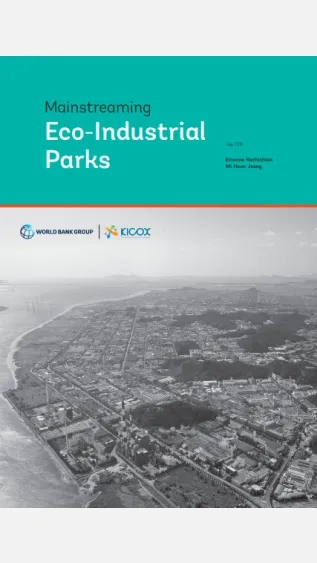
Eco-industrial parks (EIPs) and low-carbon zones can help address environmental and ecological challenges while retaining their role as production hubs and growth centers.
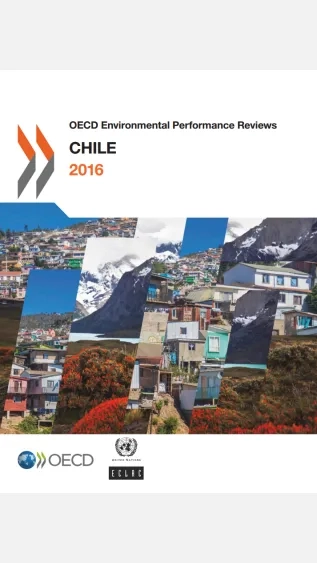
OECD Environmental Performance Reviews provide independent assessments of countries’ progress towards their environmental policy objectives. Reviews promote peer learning, enhance government accountability, and provide targeted recommendations aimed at improving environmental performance, individually and collectively. They are supported by a broad range of economic and environmental data, and evidence-based analysis. Each cycle of Environmental Performance Reviews covers all OECD countries and selected partner economies.
This report is the second Environmental Performance Review of Chile. It evaluates progress towards sustainable development and green growth, with a focus on climate change and biodiversity conservation and sustainable use.
Habitat III — the United Nations Conference on Housing and Sustainable Urban Development — will take place in October in a new global context. Post-2015, international agreements and processes offer the opportunity for Habitat III to make more real transformative commitments in pursuit of a sustainable and just urban future than its predecessors. But if it is to do so, flaws in the revised Zero Draft of the New Urban Agenda must be urgently addressed. While IIED, IDS and DPU collectively welcome the current transformative commitments, the revised Zero Draft lacks both an overarching vision that recognises the vital links between the three commitments and a consistent approach to implementation.
The current contradictions threaten to make the commitments ineffective individual workstreams. To reach its transformative ambition, we argue that the final New Urban Agenda must make these connections, and suggest four specific ways in which it could achieve greater coherence and inclusivity.
The 48 Least Developed Countries (LDCs) are the only country grouping to have a dedicated article in the UN Framework Convention on Climate Change (UNFCCC). Article 4.9 commits all parties to the convention to take full account of their specific needs and special situations with regard to funding and technology transfer. As part of efforts to implement this commitment, in 2001 the Least Developed Countries Fund (LDCF) was established to support LDCs in their climate change actions. But 15 years later, the fund is empty while the backlog of projects waiting for resources continues to grow. Is there a future for the LDCF in the post-Paris climate regime? The LDCs argue that there should be, but the fund needs strengthening.
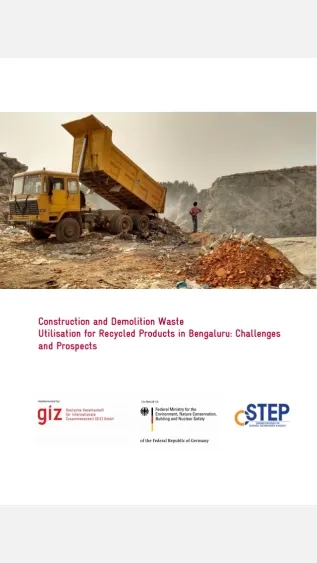
India is currently one of the fastest-growing economies in the world and the construction industry alone accounted for approximately 10% of its GDP in 2014. The Central Pollution Control Board (CPCB) classifies waste generated from the Construction and Demolition (C&D) of buildings and civil infrastructure as construction and demolition waste (CDW). The CPCB has estimated solid waste generation in India to be around 48 million tonnes per annum of which the construction industry accounts for approximately 25%. However, this estimate of 12-15 million tonnes of CDW is widely considered dated and a significant underestimate; but no updated comprehensive estimate for the country exists. In India, although some valuables are recovered from CDW and some of it is used for filling, most of it gets disposed in landfills or through unauthorised dumping in low-lying areas, open spaces, roadsides or water bodies creating enormous nuisance and environmental problems. India requires a paradigm shift from a dumping based approach to utilising CDW efficiently.
With around one-third of the world’s arable land degraded, estimated annual losses of 6.3 to 10.6 USD trillion, and a projected need to increase food production from land by 70 percent by 2050, we simply cannot afford to neglect the loss of potential production from careless land management. Whenever land is not producing at its potential, it is an underperforming asset that requires investments to ensure the future supply chains that many industries depend upon.