
There is a growing body of evidence that environmental regulations can support strong economic performance. This report from Sustainable Prosperity finds that environmental regulation comes with lower compliance costs and greater innovation than previously thought.
In 2014, researchers at the OECD constructed the first comprehensive set of data on environmental strictness and found that “an increase in stringency of environmental policies does not harm productivity growth.” We know this to be true for specific policies as well – the United States SO2 market has led to a greater than expected emissions reduction, at less than half the predicted compliance costs. The same good news story has been seen in Canada – The introduction of British Columbia’s carbon price coincided with a 16% decrease in overall fuel use in its first 5 years, at the same time that the province’s economy grew slightly more quickly than the rest of Canada’s.
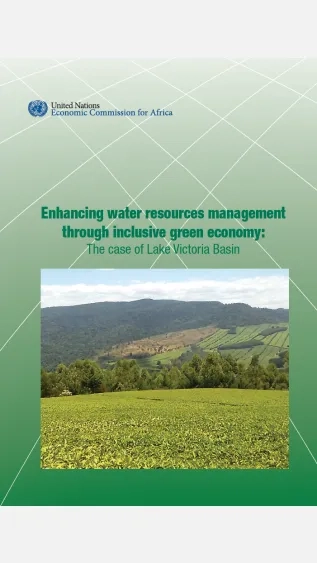
Lake Victoria in East Africa, the world’s second largest lake, is endowed with abundant water and other natural resources. The lake is transboundary and of significance to its basin countries – which are also East African Community (EAC) partner States (Burundi, Kenya, Rwanda, Uganda and United Republic of Tanzania) – and basin communities because of its role in supporting valuable ecosystem services, livelihood systems and economic activities. The basin’s natural resource endowments include water resources (the lake’s estimated volume is 2,700 km3); rivers, streams and wetlands; abundant and fertile land; natural forest resources; minerals; and wildlife, including a high annual fish yield estimated at more than $550 million. It also hosts the crested crane and the globally threatened sitatunga – a swamp dwelling antelope.
Taking into account bilateral political and economic relations, the authors analyze the role of institutional distance and host country attractiveness in location determinants of Chinese Foreign investments in EU in the renewable energy sector. Findings show that Chinese firms tend to invest in EU countries with reduced rule of law; market affluence is an attraction factor for them, but they do not seem to be human capital asset-seekers. Countries with politically stable environment are most attractive to sales/services subsidiaries; while countries with good control of corruption, low trade barriers and encouraging foreign ownership are most attractive to manufacturing subsidiaries. A large market is the most attractive factor for R&D subsidiaries, and a rich market is the most attractive factor for manufacturing subsidiaries. Manufacturing subsidiaries are more technological asset-seekers. R&D subsidiaries are the most non-human capital asset-seekers.

Inclusive Green Economy (IGE) approaches and those that address the Poverty-Environment Nexus (PEN) can play a central role in advancing the SDGs. This report seeks to further the understanding of the practicalities of embedding integrated approaches across the planning cycle in countries at various stages of development. In particular, this report synthesizes a wide range of policy and programming experiences, and draws on the findings of eight national scoping studies (Bangladesh, Ethiopia, Kenya, Kyrgyzstan, Peru, Rwanda, Tajikistan and Viet Nam) on integrated planning.
Green finance is a strategy for financial sector and broader sustainable development that is relevant around the world. But the context differs considerably for different countries. Developing countries, notably those with underdeveloped financial systems, face particular challenges in financing national development priorities.
Broadly, concern and action to align financing to sustainable development is concentrated in three areas:
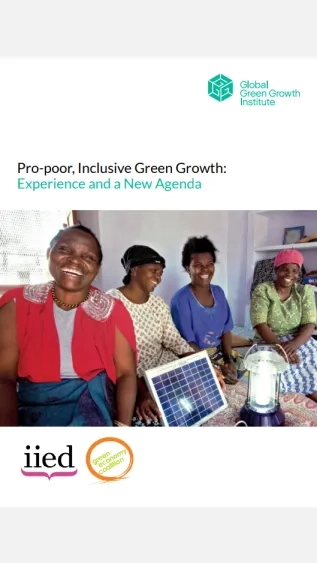
This report shows how green growth can address some of the drivers of poverty and social exclusion.