
This report responds to the request by G7 Leaders at the Schloss Elmau Summit in June 2015, for the OECD to develop policy guidance on resource efficiency. Establishing a resource efficient economy is a major environmental, development and macroeconomic challenge today. Improving resource efficiency by putting in place policies that implement the principles of reduce, reuse, recycle (the 3Rs) is crucial to improving resource use, security and competitiveness while diminishing the associated environmental impacts.
This report covers a wealth of policy applications either implicitly or explicitly informed by behavioural insights (BIs). It reviews institutional developments and puts forward a comparative framework (PRECIS) describing behavioural insight teams with six key features. The Report reaches four main conclusions: i) in terms of capacity-building, there is significant dynamism and growing appetite to apply BIs to policy-making; ii) links between policy-making and academy communities can be strengthened and analysing large datasets offers great potential; iii) systematic application of BIs throughout the policy cycle can advance evidence-based policy-making; iv) need of more research on the long-term impacts of policy interventions.
UFZ and GIZ have published the paper Increasing the Policy Impact of Ecosystem Service Assessments and Valuations: Insights from Practice. This report is based on a review of past assessments and builds on the authors’ practical experience.
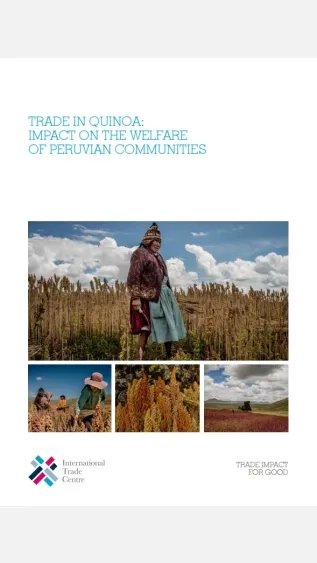
This report Trade in Quinoa examines the impact of the international quinoa prices on the livelihoods of communities in the Peruvian altiplano.
In Burkina Faso, more effective macroeconomic management based on policies to promote sustained and sustainable growth remains a priority goal. However, it is now recognized that maintaining rapid growth is not synonymous with structural transformation or a rapid reduction in poverty. To achieve the above-mentioned goals, growth must be deliberately oriented towards sustainable, inclusive development, predicated in particular on a process of agricultural modernization, industrialization tailored to national circumstances and economic diversification which creates jobs, helps to lower poverty levels and gives wider access to basic services. Accordingly, an inclusive green economy, designed in a spirit of structural transformation, is increasingly recommending itself in policy and strategy debates as the most suitable way of bringing about sustainable economic and social transformation.
This report Natural Capital Measurement at Statistics Canada provides an overview of Statistics Canada’s efforts to measure the state of Canada’s natural capital (ecosystems, land and sub-soil resources), the demands placed upon it by human activities and the efforts undertaken to manage these demands.