
Building a Sustainable Financial System in the European Union presents a stock-take of actions under way at the European Union level and in selected Member States to align the rules governing the financial system with environmental sustainability.
Looking across the range of innovations across the EU, five broad policy priorities emerge. The central challenge of financing sustainable development in the EU is one of capital reallocation. Enhancing frameworks for risk management, clarifying the core responsibilities of financial institutions and improving reporting and disclosure across these dimensions will be necessary to fully unlock flows of sustainable finance. A growing number of Member States are delivering on individual aspects of these priorities, and others are acting within given asset classes. The debate is now advancing to the system level and the need for a strategic reset, seeking to link previously unconnected initiatives and to enhance the capacity of the financial system to support renewed economic competitiveness and improved sustainability performance.
The objective of this Scoping Study on Integrating Poverty Reduction, Environmental and Economic Concerns into National Development Planning: Rwanda Report is to assess the extent to which Rwanda has adopted integrated approaches in its development planning process and transitions to more inclusive, greener economies.
The working paper Power and Governance in Agri-food Systems: Key Issues for Policymakers presents an analysis of the dominant and growing agri-food system in South Africa, focusing on power and governance as two key factors that critically influence system outcomes.
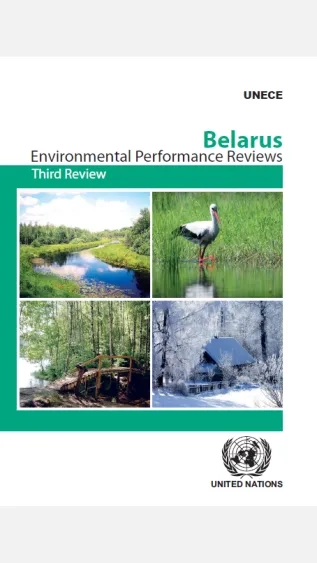
The Third Environmental Performance Review of Belarus examines the progress made by the country in the management of its environment since the country was reviewed in 2005 for the second time.
Overreliance on investment in the so-called ‘brown economy’ between the late 20th and early 21st centuries led to a state of financial imbalance and was a contributing factor in the global financial crises of 2008. An alternative economic paradigm, centred on a ‘greening’ of the economy, provides greater focus on investment in renewable energy, energy efficiency, public transportation, sustainable agriculture, ecosystem and biodiversity protection, and land and water conservation. These ‘green economies’ are also likely to be more resilient and socially inclusive, particularly in the face of environmental pressures, such as climate change.
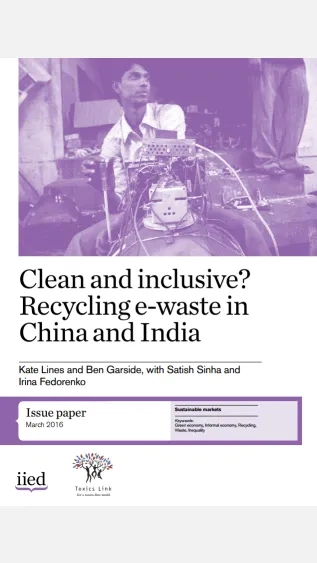
E-waste – electrical and electronic waste – is one of today’s fastest growing waste streams. By managing it well, we can recover valuable raw materials and reusable parts, with significant associated emissions savings. But much of its potential is lost when incorrectlly processed by informal and unregulated enterprises. This can damage both people’s health and the environment and intensify the vulnerability of workers.
Informal markets are where most of the world’s poor produce, consume and trade goods. Using case studies from China and India – both with huge informal e-waste sectors – this paper explores how to build inclusive, greener economies that retain the benefits of informal markets, while addressing how and why people are excluded from formal activities. Both countries are stepping up efforts to regulate but are failing to take into account the importance of engaging with the informal e-waste sector. How can drives to clean up harmful practices take their experience and expertise into account? And how can we develop effective policies to tackle pollution while supporting the health, livelihoods and economic activities of the poor and vulnerable?