

This study explores how the proposed activities by the Congo Basin countries to reduce drivers of land emissions from deforestation and forest degradation (REDD+) could support the transition to a green economy and low carbon development future. By employing a content review and analysis of national REDD+ strategies and REDD+ readiness proposals submitted to the Forest Carbon Partnership Facility, the researchers found out that many of the proposed REDD+ activities by the Congo Basin countries including: climate smart agricultural practices and certification of large scale agricultural plantations; establishment of wood fuel energy plantations and improvement in energy efficiency; forests certification and implementation of the VPA-FLEGT; land use planning and zoning of mined sites; and the implementation of construction projects in low forested areas aligns with several green economy sectorial programmes of the Economic Community of Central African States (ECCAS).
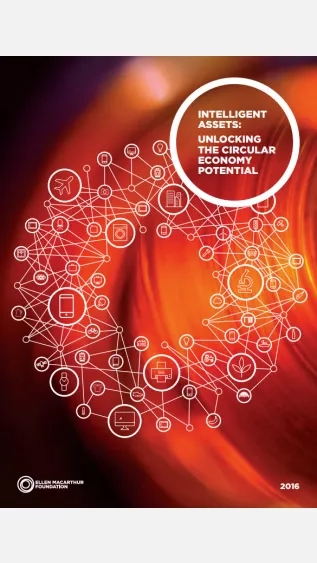
This report, Intelligent Assets: Unlocking the circular economy potential, finds that pairing circular economy principles with the information generated by intelligent devices creates a fertile ground for innovation that could enable this decoupling, and lead to broad social benefits.
Designing and building a sustainable financial system requires a broad focus on what sustainability requires in all its aspects and how finance can help deliver on that important objective. This task includes not only delivering financing for sustainable environmental outcomes and addressing climate change, but it also includes attention to the needs of a sustainable society. Societies in which segments of the population suffer extreme poverty, marginalisation and discrimination, lack access to basic healthcare and education, or lack the rule of law or freedom of speech, or must cope with dysfunctional, corrupt or unaccountable public institutions, create social pressures which, in turn, strain environmental and economic resources. It is difficult if not impossible to address the needs of a sustainable planet without taking account of the critical role that a sustainable society plays. It follows that a sustainable future for all requires a coherent vision of how the layers of society, economy, environment, and finance interact, and the role of the financial system in facilitating sustainable livelihoods and societies.
The State of Sustainable Finance in the United States discusses the topography of financial sector surrounding the sustainable momentum in the US. While US financial institutions have at times enjoyed a reputation of being something of a laggard on sustainability issues versus their European counterparts, significant changes and innovations are under way which are beginning to drive meaningful change.
Record levels of awareness on sustainability issues in the US, including from millennials, are accelerating activities such as:
- Increased levels of sustainable and responsible investing.
- An increased focus from the largest US banks and other financial institutions on sustainability risks, lending practices and related opportunities.
- US insurance companies and related regulators are also developing and evolving sustainability risk frameworks.
- Federal and State policies are accelerating the ongoing US low carbon energy transition.
Financial innovation is driving meaningful change in many investment sectors while social innovation and culture development also continue to evolve.
Making the Jump: How crises affect policy consensus and can trigger paradigm shift outlines the dynamics behind the financial regulatory paradigm shift that began in 2008-2009. It seeks to identify parallels with and differences from the slower moving, even more consequential, global climate change crisis, and the fitful, still under way, policy paradigm shift that the United Nations Environment Programme (UNEP) and other stakeholders are trying to support and facilitate linking economic sustainability, financial regulation, markets, and climate change. The following ten observations are developed in this paper:
The Equator Principles are a voluntary code of conduct and a risk management framework for determining, assessing and managing environmental and social risks in projects, such as energy or infrastructure projects. Since their foundation in 2003, they were lauded for integrating social and environmental assessment practices into project assessments. Critics reason, however, that without fundamental implementation efforts and enforcement, the Equator Principles will not contribute to any change with respect to effects of projects on sustainable development.