
Imagining a sustainable financial system allows us to move beyond conventional wisdom. Imagining a Sustainable Financial System sets out that a sustainable financial system would be one that serves the long-term needs of a healthy real economy, an economy that provides decent, productive and rewarding livelihoods for all, and ensures that the natural environment on which we all depend remains intact, and so able to support the needs of this and future generations.
It offers a framework for considering the performance of a sustainable financial based on two axes, its impact on social and environmental systems (‘sustainability impacts’) and its own sustainability in the face of exogenous shocks induced by these factors.
This paper was presented at the UNEP Inquiry/Centre for International Governance Innovation Academic Symposium on the Design of a Sustainable Financial System, held in Waterloo Canada in December 2014.
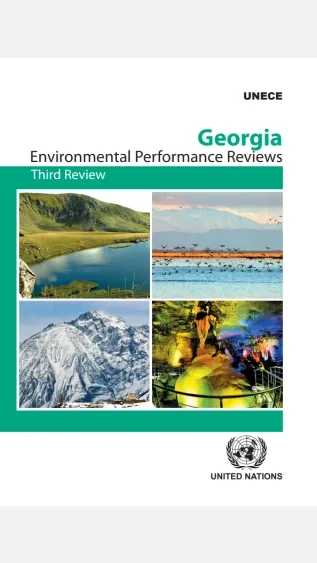
The Third Environmental Performance Review of Georgia takes stock of the progress made by Georgia in the management of its environment since the country was reviewed in 2010 for the second time.
While initial steps have been taken to diversify the energy mix in North Africa, large-scale deployment of renewable energy technologies and a transformation of the energy sector are lagging behind. This chapter argues that a systemic approach is essential for scaling up renewables, as piecemeal measures are not likely to capture the full range of expected outcomes. Systematic learning should be at the core of policy-making with a view to capturing long-term benefits, as well as an effort to coordinate across development agendas and foster alliances between stakeholders with diverse interests in the energy sector and beyond. Ultimately, a new narrative that discredits the “old” energy regime and sheds light on the cobenefits of pursuing an integrated approach to green growth and energy sector transformation is needed.

Laboratory studies suggest that improved cooking stoves can reduce indoor air pollution, improve health, and decrease greenhouse gas emissions in developing countries. The authors provide evidence, from a large-scale randomized trial in India, on the benefits of a common, laboratory-validated stove with a four-year follow-up. While smoke inhalation initially falls, this effect disappears by year two. They find no changes across health outcomes or greenhouse gas emissions. Households used the stoves irregularly and inappropriately, failed to maintain them, and usage declined over time. This study underscores the need to test environmental technologies in real-world settings where behavior may undermine potential impacts.
The policy summary for this paper is available here.
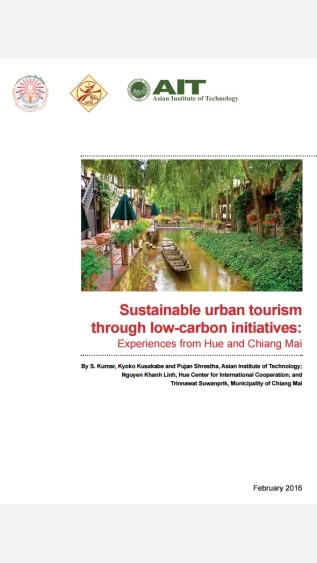
Tourism contributes to about 5% of total global greenhouse gas emissions, and the most common greenhouse gas, carbon dioxide (CO2), is emitted through goods and services related to tourism. Major tourism-related CO2 contributors include energy used for transport (from origin to destination as well as for local travel at the destination), development and operation of tourism infrastructure (e.g. hotels, road construction, heating and cooling) and various leisure activities. Thus, tourism contributes to some extent to global warming and climate change.
This report constitutes the background paper prepared for a CDKN-ICLEI learning programme. It provides a deeper analysis of the different factors which determined the course and the final outcome of the project ‘Sustainable urban tourism through low-carbon initiatives: Experiences from Hue and Chiang Mai’, conducted during 2012–2013.
The report’s main objective is to provide key lessons from the sustainable urban tourism project through the analysis of different enabling conditions and obstacles that determined the course and the final outcome of the initiative.
Keeping global warming below 2°C will require substantial reductions in global greenhouse gas emissions over the next few decades.
This report highlights that leaving the transition to a low-carbon economy too late risks affecting the economy of the European Union in three ways:
- first, a sudden transition away from fossil-fuel energy could harm GDP, as alternative sources of energy would be restricted in supply and more expensive at the margin;
- second, there could be a sudden repricing of carbon-intensive assets, which are financed in large part by debt;
- third, there could be a concomitant rise in the incidence of natural catastrophes related to climate change, raising general insurers’ and reinsurers’ liabilities.
A gradual transition to a low-carbon economy is therefore seen as the best option; this choice would be better manageable and would prevent energy costs from rising abruptly. Furthermore, additional policy intervention and investments in low-carbon technology are likely to help in preventing greenhouse gases in the atmosphere from growing in the medium term.