
Punjab is a small Indian state that contributes significantly to India’s food security. While the production potential of rice and wheat crops have almost been fully exploited, there is now a stagnation in the growth process, decline in real farm incomes, and over exploitation of natural resources vis-a-vis soil health and water quality and quantity. With climate change, socio-economic and ecological vulnerability has increased and risk-based approaches have become even more relevant. Green growth and sustainable development need to take into account the impacts of climate variability to strengthen policy interventions.
In recent years, China has grown into a major provider of coal power finance in overseas markets, replacing financing by major development institutions. In September 2015, China made a surprise announcement that it would commit to “controlling public investment flowing” into high carbon overseas projects. This was followed by an announcement in November 2015 that OECD countries are committing to common standards for coal subsidies, also potentially significantly restricting international finance for coal power. However, information on overseas coal finance, particularly Chinese finance, has been lacking. CPI has been able to identify China’s role in international coal power generation deployment to provide the most complete estimate of Chinese finance for overseas coal projects to date as well as estimates of the potential impact of China’s recent announcement.
This working paper provides a first overview of Central Kalimantan’s oil palm value chain and the business actors involved throughout. It aims to identify how business investment can be optimized to support socially inclusive development, delivering productivity, profitability, and sustainability gains.
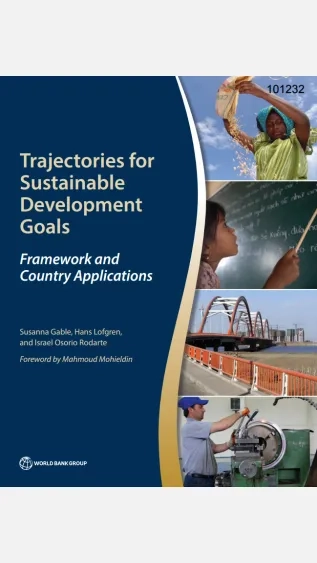
In September 2015, the United Nations General Assembly adopted the 2030 Agenda for Sustainable Development and now individual countries face the challenge of implementing strategies that help realize the ambitions of this agenda, embodied in the Sustainable Development Goals (SDGs).
This book presents a Country Development Diagnostics Post-2015 framework, designed to assess country-level implications of the 2030 Agenda for Sustainable Development, and applications of the framework to ten countries. The framework helps policy makers identify policies that may accelerate progress on the SDGs, and analyze sources of fiscal space to finance additional spending. Current levels of SDGs and their determinants are benchmarked on the basis of country per capita income, making it possible to compare the focus country to other countries. On the basis of current prospects for income growth, the framework also projects likely SDG outcomes for 2030 in the absence of accelerated progress.
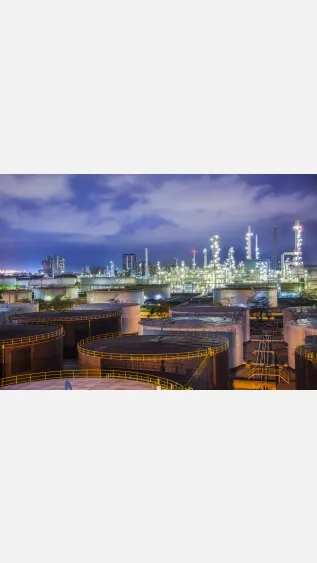
In a new policy brief, the Grantham Research Institute on Climate Change and the Environment and GGGI examine the pros and cons of various proposals on how to spend revenue from carbon pricing.

Fiscal considerations may shift governmental priorities away from environmental concerns: finance ministers face strong demand for public expenditures such as infrastructure investments but they are constrained by international tax competition. We develop a multi-region model of tax competition and resource extraction to assess the fiscal incentive of imposing a tax on carbon rather than on capital. We explicitly model international capital and resource markets, as well as intertemporal capital accumulation and resource extraction. While fossil resources give rise to scarcity rents, capital does not. With carbon taxes, the rents can be captured and invested in infrastructure, which leads to higher welfare than under capital taxation. This result holds even without modeling environmental damages. It is robust under a variation of the behavioral assumptions of resource importers to coordinate their actions, and a resource exporter’s ability to counteract carbon policies. Further, no green paradox occurs—instead, the carbon tax constitutes a viable green policy, since it postpones extraction and reduces cumulative emissions.