

This year, for the first time ever, nearly all of the world’s countries are making pledges to help limit future climate change. As of 1 October 2015, 147 countries (representing about 85% of global emissions) have submitted their Intended Nationally Determined Contributions. These pledges, if carried out in full, are expected to lower emissions relative to the ‘business as usual’ forecast. However, they are not expected to prevent emissions from increasing above today’s level through 2030. To meet the global goal of limiting mean global temperature change to 2°C relative to the pre-industrial level, much more will need to be done after 2030. Eventually, emissions will have to fall to zero worldwide – either that, or countries will need to remove carbon dioxide directly from the atmosphere. This new Vox eBook looks into what needs to be done to build a climate regime that is both workable and effective.
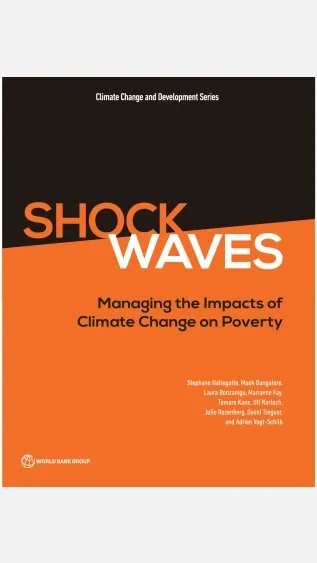
Climate change and climate policies will affect poverty reduction efforts through direct and immediate impacts on the poor and by affecting factors that condition poverty reduction, such as economic growth. This report explores the relation between climate change, climate policies, and poverty outcomes by examining three questions: the (static) impact on poor people's livelihood and well-being; the impact on the risk for non-poor individuals to fall into poverty; and the impact on the ability of poor people to escape poverty. The report explores various channels through which climate change and policies will affect poverty: economic impacts through incomes and prices; natural disasters and their effects on assets and livelihoods; and health impacts. It also investigates policy options to ensure adaptation and mitigation policies -- such as adaptive and well-targeted social protection, public investments, and financial inclusion policies -- contribute to poverty reduction and protect poor people against climate change impacts.
Nowadays, sustainable development has been introduced and integrated into production and operation management field through the concept of the green supply chain. Green regulations and principles have gained the interest of managers and practitioners in selecting innovative practices for suppliers and organisations. Accordingly, the present study aims to evaluate the relationship between a green supplier, green innovation, environmental performance, and competitive advantage in the cement industry, which is an important industry for Iran. This study is descriptive in nature and conducted based on correlation and structural equation modelling. Managers and experts of cement companies in Fars Province are selected as samples for the study. A questionnaire and Smart-PLS software were used as research tools. The results of data analysis show that there is a positive and significant relationship between a green supplier, green innovations and environmental performance of an organisation, while there is a negative yet significant relationship between a green supplier, green innovations and environmental performance of an organisation.
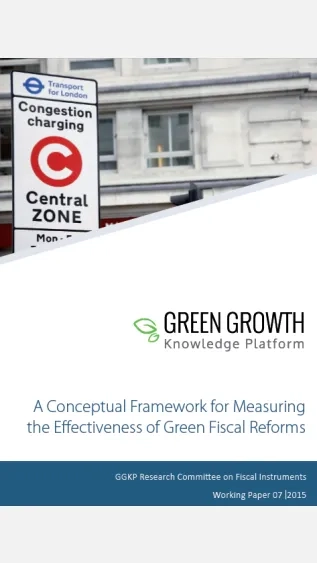
This GGKP working paper provides a conceptual framework for assessing the effectiveness (strengths and weaknesses) of a green fiscal reform.
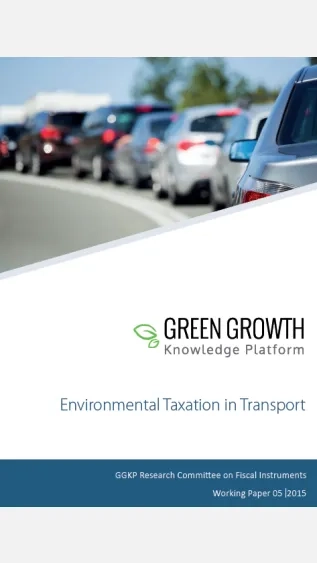
This GGKP working paper focusing on 'Environmental Taxation in Transport' provides examples from cars to maritime shipping, highlighting common themes in environmental improvements beyond technology improvements: exploitation of scale economy, capacity utilization and slower speeds.
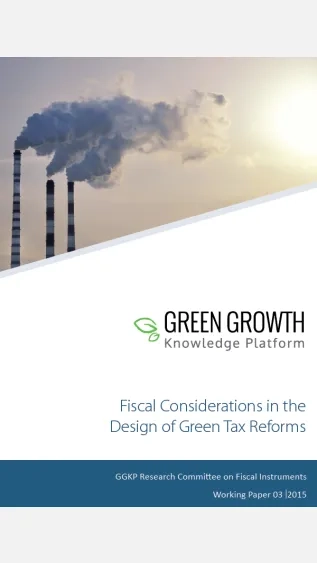
This GGKP working paper develops a conceptual framework that allows policymakers to estimate the revenue potential of an envisioned environmental fiscal reform (EFR) instrument.