
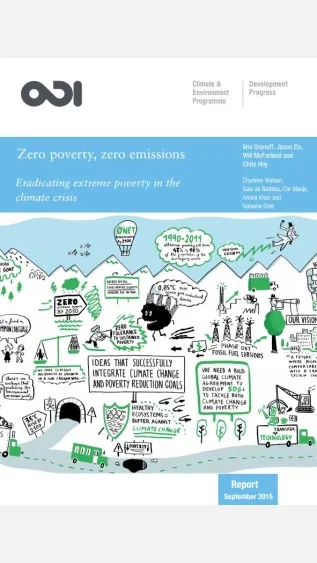
The eradication of extreme poverty is the minimum ethical floor of the global development agenda. With projections suggesting eradication is possible by 2030, the goal of ‘zero extreme poverty by 2030’ is a compelling objective.
However, climate change could be an obstacle to achieve this goal. It would hit the very poor hardest, making it tougher for those in extreme poverty to escape it, and drawing the moderately poor back into extreme poverty. Countries will need even greater ambition, and great support, to adapt and limit impacts on the poor.
But adaptation to climate extremes becomes increasingly implausible, particularly for the poorest, as we move beyond 2°C global mean temperature rise. Avoiding surpassing 2°C will require zero net greenhouse gas (GHG) emissions before the century’s end. To achieve zero emissions, and indeed to peak in the next couple of decades, all countries need to transform their economies.
At the heart of green industrial policy is rent management: government creating and withdrawing opportunities for profitable investment. This paper asks what the key factors are for rent management to succeed. Drawing on a range of literatures, the paper first deals with the critical success factors for ‘normal’ rent management and then turns to one of the most pressing and controversial issues of our time: how to bring about the transition to green energy. This is extra challenging because technological uncertainties are high, time horizons for investment are long, yet action is required now.
Transforming the world economy towards sustainability, while ensuring decent levels of resource use for all global citizens, is the greatest challenge of our time. This book explores how innovation systems need to be adapted to successfully confront these challenges. The first chapter introduces the concept of sustainability-oriented innovation systems which highlights the systematic differences between systems that have developed along current resource-intensive technological trajectories and those that address the impending environmental mega-problems. The subsequent articles present case studies of sustainability-oriented innovations in a number of policy areas, including energy efficiency, electric mobility and generation of renewable energy, in China and India. These case studies confirm the specificities of innovation systems geared towards a green techno-economic paradigm.
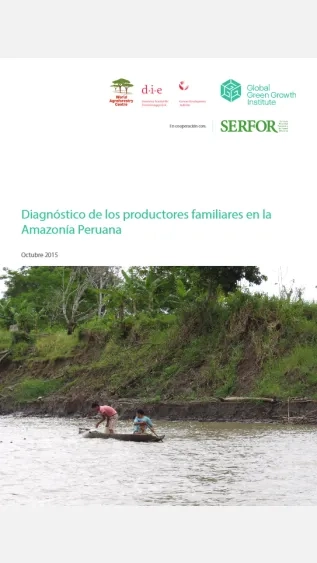
Through in-depth case studies in Ucayali and San Martin, Peru, this document elaborated jointly by the Global Green Growth Institute (GGGI), the German Development Institute (DIE) and the International Centre for Research in Agroforestry (ICRAF) develops a typology for family producers based on quantitative and qualitative research. This typology includes land use, behavioral incentives and recommendations for the National Forest and Wildlife Plan that promote the full participation of family producers in the forest economy.
The European Commission and European Investment Bank have launched the European Fund for Strategic Investment (EFSI) to help recover the European Union economy. EFSI aims to bridge the investment gap and drive private capitals towards key productive sectors, such as energy efficiency and renewables. These fields are supposed to benefit the most from the Fund, given their investment needs and capacity to spur sustainable economic growth. However, limited public contributions, reshuffled capitals, and scarce capacity to improve the policy and regulatory framework characterize EFSI structure. Therefore, experts have cast doubt on the effectiveness of the Fund and its impact on the clean energy sector.
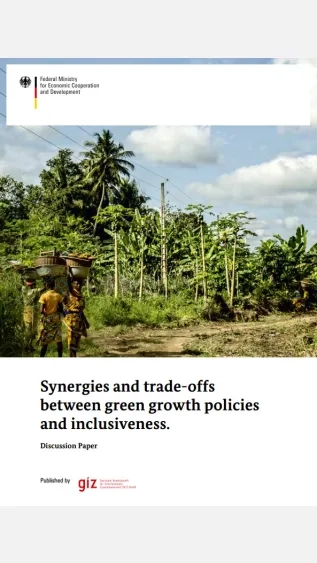
Over the past 20 years, two major challenges have dominated international debate on sustainable development: the imperative of environmental protection and the eradication of all dimensions of poverty. Economic growth lies at the heart of both these issues. It is required to reduce poverty but, at the same time, needs to be decoupled from natural resource use and greenhouse gas emissions in order to preserve the livelihoods of current and future generations. Several concepts aim to reconcile this dilemma and offer much to delineate green and inclusive growth, many important aspects remain vague. However, it is important to facilitate a systematic assessment of interactions (i.e., synergies and trade-offs) between the green and inclusive dimensions of growth as it is a central concern of policymakers.