

The win-win opportunities connected to green growth are appealing to academics and policy makers alike, but empirical evaluations about the effectiveness of green growth policies are still scattered. Taking the Republic of Korea as a case study, which set up a highly ambitious green growth program in 2009, this research casts light on the extent to which the Korean Green Growth Strategy has been effective in decarbonizing the economy.
When compared to other regions, Asia has the highest rate of policy innovations that can help in the transition to a green economy. Even though fiscal instruments in-use are to some extent already altering aggregate demand of resources and economic activities, resource allocation, and distributive capacity of the economy, instrument such as “carbon tax” that has the real potential to contain rising emissions and save economies from getting locked into carbon-intensive pathways are yet to be adopted widely. Sporadic adoption of fiscal instruments is not going to be enough, if Asia as a region, is to transition to a green economy. In addition, there are substantial implementation barriers that need to be eased for wide-scale adoption and diffusion of green fiscal instruments.
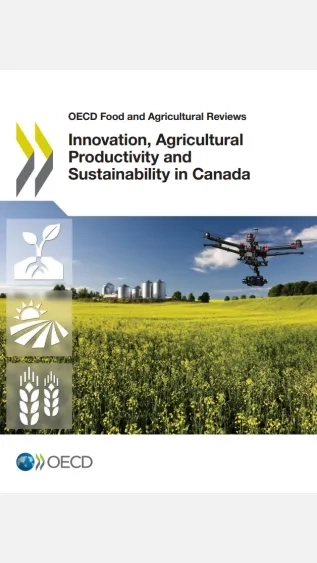
The review Innovation, Agricultural Productivity and Sustainability in Canada examines the conditions surrounding innovation in the food and agriculture sector business and allowing for increased productivity and environmental sustainability.
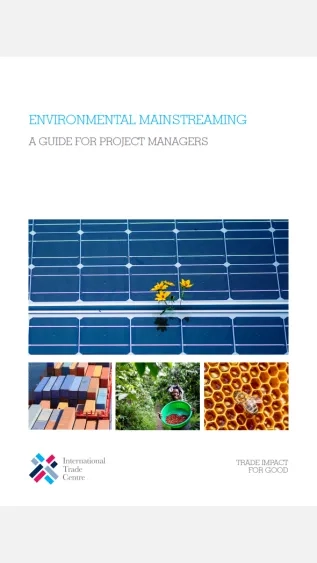
A new guide from the International Trade Centre (ITC) provides project managers with tools to assess environmental considerations in project planning and implementation, in order to mitigate risks, enhance resilience and seize opportunities to expand trade in sustainable goods and services. The Environmental Mainstreaming Guide and its accompanying training programme are part of ITC’s corporate approach to sustainable development, which in turn responds to the United Nations’ long-term commitment to environmental sustainability.
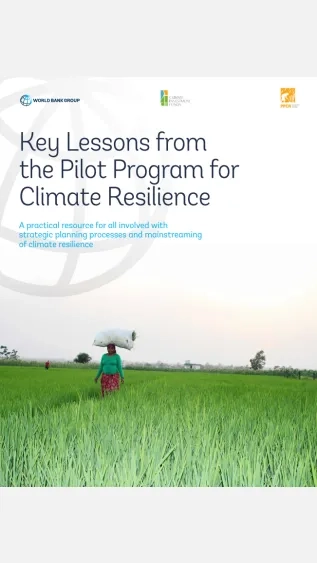
"Key Lessons from the Pilot Program for Climate Resilience" is a practical resource for all involved with strategic planning processes and mainstreaming of climate resilience.
This resource helps countries bolster the resilience of their infrastructure, natural resources and human development programs, to the effects of climate variability and change. The experiences presented come from the first 7 years of implementing the Pilot Program for Climate Resilience (PPCR) in 18 countries and covering sectors including agriculture and landscapes, water resources, coastal zone, urban development, climate information systems, and other infrastructure.
The top 10 Key Lessons from the PPCR highlight critical and strategic aspects that need to be considered in resilience planning and implementation. These lessons underscore the importance of institutional arrangements; information on climate vulnerabilities; leveraging finance; transforming at scale; engaging stakeholders; dedicated learning fora; engaging private sector; core indicators and monitoring; responsiveness to country context; and where relevant regional programming.
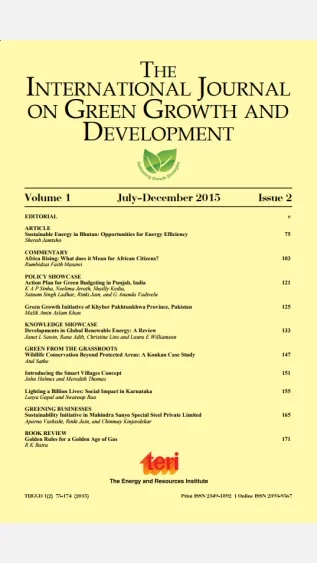
The International Journal on Green Growth and Development is an effort to stir a debate around emerging “green” concepts and development. The publication aims at building knowledge through stakeholder engagement on policy-relevant issues to understand the many facets of green growth and development. It is a step towards a forward-looking knowledge process for new opportunities linked with growth and sustainable development. The journal showcases new research through peer reviewed articles, opinions, and innovative practices.