

This paper highlights the suitability of multilateral development banks (MDBs) for infrastructure financing, to provide the long-term financing needed for infrastructure investment to become profitable, given the large scale of the initial investment and the long amortization time. This paper outlibes giw MDBs can offer finance at a relatively low cost due to their high credit ratings. Thus, they can borrow relatively cheaper on the international capital markets and pass on that cost advantage to their borrowers. However, the authors note that MDBs face some restrictions in their ability to provide support to infrastructure, but nonetheless have numerous advantages in terms of financial terms, information, and ability to cope with risk, all of which can play a significant catalytic role. The paper is divided into the followig sub-sections: i) Loans (long tenors and big tickets) and Equity, ii) Technical Assistance, iii) New Partners, iv) Unfunded Instruments and v) Proved and Tested Instruments vs. New Instruments. And in conclusion, the authors present key findings from this study.
The cost of existing environment-friendly technologies, such as wind turbines and SO2 scrubbers, needs to be brought down so that they can be deployed on a large scale, while fundamental research needs to advance on the frontiers of technologies such as smart grids or energy storage.
Yet, despite these pressing challenges, European companies in the electricity production sector – the largest greenhouse gas emissions emitter in Europe, with 33% of European emissions in 2012 – spend less than 1% of their turnover on innovation, against 10-15% in IT or pharmaceuticals, suggesting that the incentives to conduct Research, Development and Demonstration (RD&D) of new or enhanced low carbon technologies and their associated systems and processes might not be in place.
The objective of this policy note is to investigate whether the current level of public support to environment-friendly technologies is sufficient to allow European countries to respond to the multiple challenges posed by climate change and other environmental concerns and to discuss the policy interventions that might be needed in order to drive forward clean energy technology investments in Europe.
To meet climate change targets, European Union (EU) countries need to significantly increase investment in carbon capture and storage (CCS) and show greater urgency to develop and deploy the technology. Installing 11 GW of CCS electricity generation in the EU by 2030, as envisaged by the EU Energy Roadmap, could cost between €18 and €35 billion. Current policies, including those envisaged by the 2030 framework for climate and energy and the emerging Energy Union, are unlikely to deliver this investment. Economic models indicate that CCS is crucial to the cost-effectiveness of Europe’s emissions reduction targets. CCS can provide flexible, mid-merit electricity generation, which will be much needed as the share of electricity from variable renewable sources increases. It is also, to date, the only technology that can help reduce emissions from industrial installations.
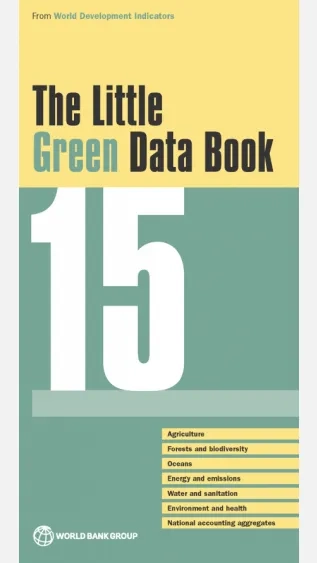
The Little Green Data Book provides key environmental data for over 200 economies, based on the World Development Indicators 2015 and its online database. Over 50 indicators are used, organized into categories on: agriculture; forests and biodiversity; oceans; energy and emissions; water and sanitation; environment and health; and national accounting aggregates. Data is presented for the regions of East Asia and Pacific, Europe and Central Asia, Latin America and the Caribbean, Middle East and North Africa, South Asia, and Sub-Saharan Africa.
The 2015 edition uses two new air pollution indicators: mean annual exposure to suspended particulate matter less than 2.5 microns in diameter (PM2.5); and percentage of total population exposed to PM2.5 pollution above the World Health Organization (WHO) Air Quality Guidelines (AQG) value of an annual average of 10 microns per cubic meter. Previous editions used indicators focused on the larger particulates (PM10) and only on urban centers with more 100,000 persons.
Also incorporated this year, are estimates of the economic costs of air pollution, including household air pollution from cooking with solid fuels.
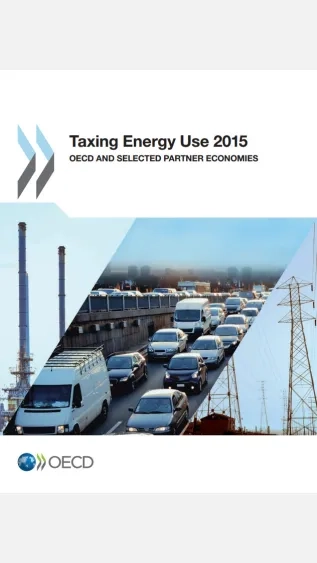
Energy is a critical input into the production and consumption patterns that support economic and social wellbeing. However, many forms of energy use contribute to the environmental and climate challenges societies face today. Taxation is a key tool by which governments can influence energy use to contain its environmental impacts. This report provides a systematic analysis of the structure and level of energy taxes in OECD and selected other countries; together, they cover 80% of global energy use.
This report builds on the 2013 edition of Taxing Energy Use, expanding the geographic coverage of the 2013 data set to include Argentina, Brazil, China, India, Indonesia, Russia and South Africa. The report describes energy use, taxation and pricing in these countries and presents detailed graphical profiles of the structure of energy use and taxation for each.
Produced by the United Nations Environment Programme (UNEP), in collaboration with Tongji University, this Chinese-language textbook aims to inform China’s economic structural transformation and its move towards ecological civilization. It involved 21 authors from 10 national and international institutions, covering the theoretical, sectoral and policy dimensions of green economy with a specific focus on key issues of relevance to China. This book is supported by illustrative examples tailored to a Chinese audience and provides a systematic understanding of the inclusive green economy concept and its linkage to the Chinese concept of Ecological Civilization.