
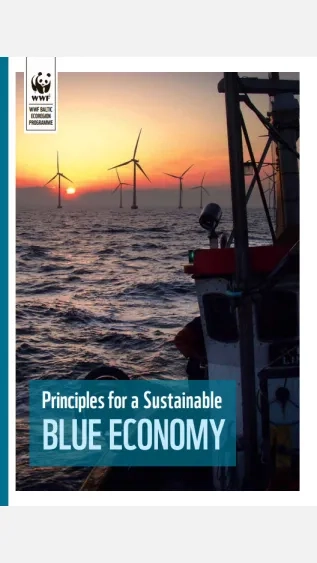
This report Principles for a Sustainable Blue Economy sets shared understanding about what characterizes a sustainable Blue Economy and economic development of the ocean for true prosperity.
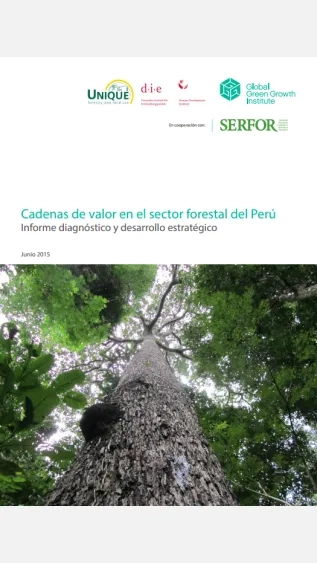
This analysis conducted by the Global Green Growth Institute (GGGI), the German Development Institute (DIE) and UNIQUE examines the growth potential for timber products nationwide and provides detailed recommendations in four priority chains: pre-sized dry sawnwood, fiberboard and particleboard, pallets, and wooden furniture.
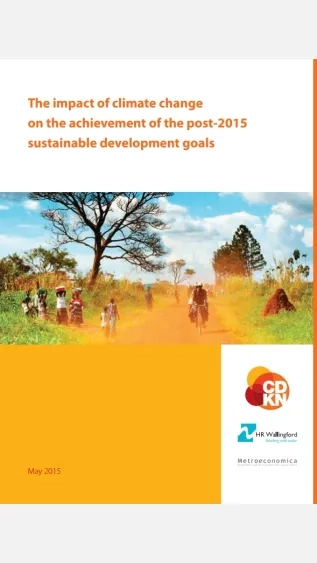
A high-ambition agreement that provides a clear policy framework for action on climate change, incentivises international cooperation, and mobilises additional resources for mitigation and adaptation activities is essential to give us the best chance of achieving the SDGs by 2030. Likewise, strong SDGs will help to lay the policy groundwork for achieving and implementing a more ambitious climate agreement.
This report, The impact of climate change on the achievement of the post-2015 sustainable development goals, considers impacts on development over the next 15 years, under two scenarios for the 2015 climate change agreement: a high-ambition agreement and a low-ambition agreement. It looks at associated policies and levels of investment in mitigation and adaptation. The high-ambition scenario used is based on the UNFCCC aim to limit global warming to a 2°C increase on pre-industrial temperatures.
The Government of India has set ambitious renewable energy targets for 2022, in order to achieve its climate goals and enhance energy security. Given India’s budget constraints, a cost-effective policy path will be crucial to achieving these targets. One way to reduce the cost of government support needed to achieve its renewable energy targets is through the tariffs it uses to procure renewable energy.
Despite diverse efforts in the past two decades, countries have not been able to create an international climate change regime that effectively addresses the challenges at stake. Meanwhile, the Arctic Ocean keeps melting, an area the size of Costa Rica is lost to deforestation every year, and low-lying islands could disappear by 2050 due to a rise in sea level. There are several other huge challenges posed by climate change, which urgently call for serious international action.

Energy efficiency has a plethora of benefits on the individual, organisational, and social levels. However, there is still a gap between knowledge and implementation. While market failure serves as an important barrier to energy efficiency uptake, so do the characteristics of human behaviour. Literature on human behaviour reveals many entry points for the inclusion of ‘behavioural insights’ in the design of energy efficiency programmes.
Drawing from case studies on small and large industry in Colombia, India, South Africa, and Uganda, this report aims to provide practitioners with illustrations of how insights into human behaviour can be effectively integrated into energy efficiency programmes. The incorporation of behavioural insights should consider four aspects: the cultural context of the target group, windows of opportunity for the intervention, drivers and motivations, and the overall fit of the intervention with the package of measures.