
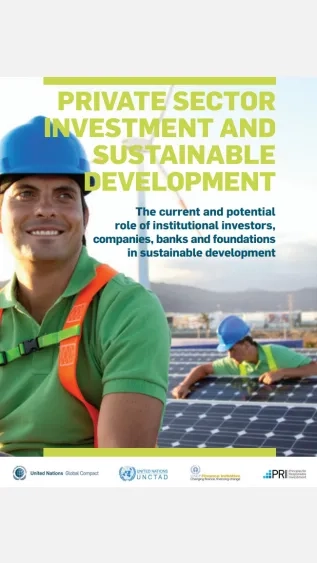
This paper Private Sector Investment and Sustainable Development seeks to provide the Financing for Development process with a perspective on the role institutional investors, companies, and foundations can play in the design and implementation of a financing strategy for global sustainability.
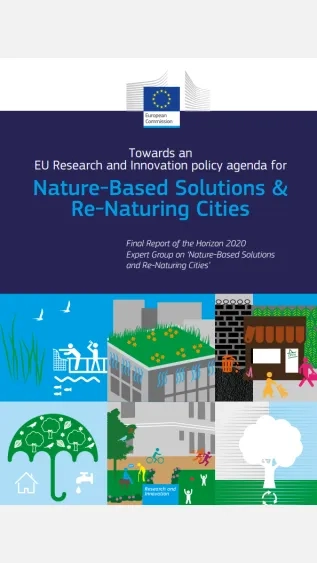
Nature-based solutions simultaneously provide environmental, social and economic benefits by bringing more nature and natural features and processes into cities, landscapes and seascapes. The Horizon 2020 Expert Group on ‘Nature-Based Solutions and Re-Naturing Cities’ was established under the 2014 Work Programme for the Societal Challenge “Climate action, environment, resource efficiency and raw materials”. For this report, renowned experts engaged in forward-looking reflection on future orientations for EU Research and Innovation for Nature-Based Solutions and Re-Naturing Cities.
An EU Research & Innovation (R&I) agenda on nature-based solutions will enable Europe to become a world leader both in R&I and in the growing market for nature-based solutions. For this, the evidence base for the effectiveness of nature-based solutions needs to be developed and then used to implement solutions.
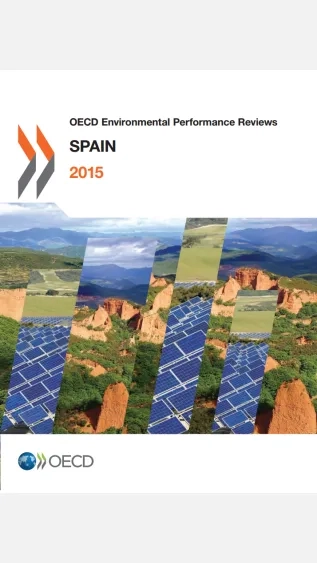
The OECD Environmental Performance Review Programme provides independent assessments of countries’ progress in achieving their domestic and international environmental policy commitments, together with policy relevant recommendations. This report is the third OECD review of Spain’s environmental performance. It evaluates progress towards sustainable development and green growth, with a focus on biodiversity and the environmental performance of the private sector.
Reviews are conducted to promote peer learning, enhance governments’ accountability to each other and to the public, and improve countries’ environmental performance, individually and collectively. They are supported by a broad range of economic and environmental data. Each cycle of the Environmental Performance Reviews covers all OECD member countries and selected partner countries.
The alleged capacity of Payment for Environmental Services (PES) to reach conservation policy goals, while reducing poverty in a cost-effective manner, makes it an extremely attractive development instrument for policymakers and international funding agencies. This article reconstructs the process of envisioning and building the National PES Strategy in Colombia. It reveals how this conservation policy has resulted from the mobilisation of the transnational/national PES epistemic community and its globally expanding discourse. The influential PES network generates internally defined standards of success that proceed without reference to empirical evidence as to the impacts of the implemented policies. PES adoption is influenced by regulatory instruments’ unsatisfactory outcomes, the ways in which market-environmentalist models induce profound indifference towards on-the-ground policy impacts, the discursive power and alignment properties of the PES policy epistemic community, and financial and political pressures by international banks and environmental NGOs.
This report contributes new insights into the growing body of literature on inclusive green economy approaches as a key means for eradicating poverty and advancing the evolving post-2015 sustainable development agenda. The report draws on a range of country experiences and a series of case studies commissioned through the UNDP-DESA-UNEP Joint Programme Supporting a Green Economy Transition in Developing Countries and LDCs: Building Towards Rio+20 and Beyond, with the generous support of the Government of The Netherlands. Its non-prescriptive findings are designed to inform country-led efforts to transition to greener, more inclusive economies in ways that deliver on poverty reduction.
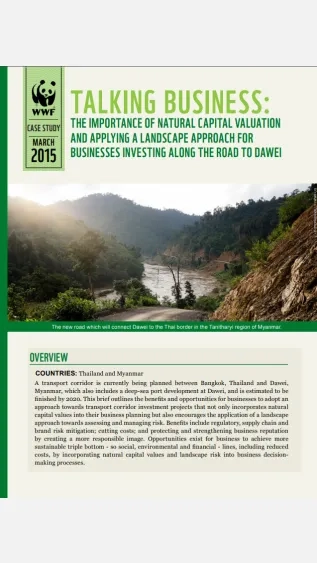
This brief outlines the benefits and opportunities for businesses to adopt an approach towards transport corridor investment projects that not only incorporates natural capital values into their business planning but also encourages the application of a landscape approach towards assessing and managing risk.