
This synthesis report by UNEP provides an overview of where Africa, as a region, stands in terms of transitioning to an inclusive green economy. It draws on studies to summarise the prospective gains and challenges associated with investing in a green economy and outlines a way forward to prioritise policy reforms, with a specific section on how to turn strategies and practices challenges into opportunities.

This study examines various low-carbon green growth (LCGG) initiatives that the South Korean government introduced to market Korea as a trendsetter in the global environmental arena. The country's domestic foundations for environmental innovation, however, reveals a dissonance between its international aspirations and the internal conditions that are needed to sustain the pursuit. This case of mixed environmental achievements by a rising middle-power state suggests the insufficiency of a state-led approach to environmental innovation and leadership.
The Korean government adopted “green growth” in 2008 as an environmentally friendly growth strategy. The energy efficiency of Korea, however, is still relatively low due to the large portion of energy intensive industry (EII) in its manufacturing sector. To improve energy efficiency in Korea, from an EII perspective a new approach has to be taken because restructuring entire industries would take too much time and be too costly. This study aims to emphasize the importance of innovation and analyze the effects of R&D on product and process innovations in EII in Korea. The Probit model is adopted to estimate the effects of eight determinants in the Korea Innovation Survey 2008 data. The results of this study demonstrate that one of the most important determinants, the R&D personnel ratio, has a strong positive effect on both product and process innovation, while another determinant, R&D intensity, only has a strong and positive effect on process innovation in EII. Because of the resulting innovation, energy policies should be enacted to enhance energy efficiency.
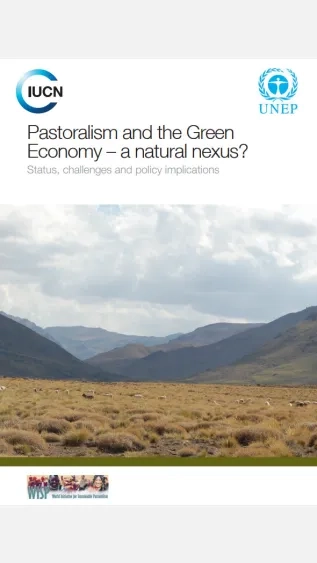
This study Pastoralism and the Green Economy – A Natural Nexus? focuses on pastoralism’s current and future potential for securing sustainable management and green economy outcomes from the world’s rangelands.
While the world’s cities face an array of challenges and priorities – which are as diverse as the cities themselves – the need to establish a more sustainable footing for urban and peri-urban industry is common to many. Including industry in integrated strategies, policies, and planning to manage resource use will be crucial for these cities in the pursuit of greater environmental sustainability, as well as employment and improved living standards.
Public policy sets the rules of the game. Public policy critically affects the ability of long-term investors to generate sustainable returns and create value. Public policy also affects the sustainability and stability of financial markets, as well as social, environmental and economic systems.
Policy engagement by long-term investors is, therefore, a natural and necessary extension of an investor’s responsibilities and fiduciary duties to the interests of beneficiaries.
The importance of public policy for long-term investors has grown in recent years, due to factors such as legislative reform of the financial sector in the wake of the global financial crisis, governmental need for investors as a source of long-term finance, and the increasing impact of environmental, social and governance factors on the ability of investors to deliver long-term returns.